
Chrysler Gas Cap Warning Light: What It Means and How to Clear It
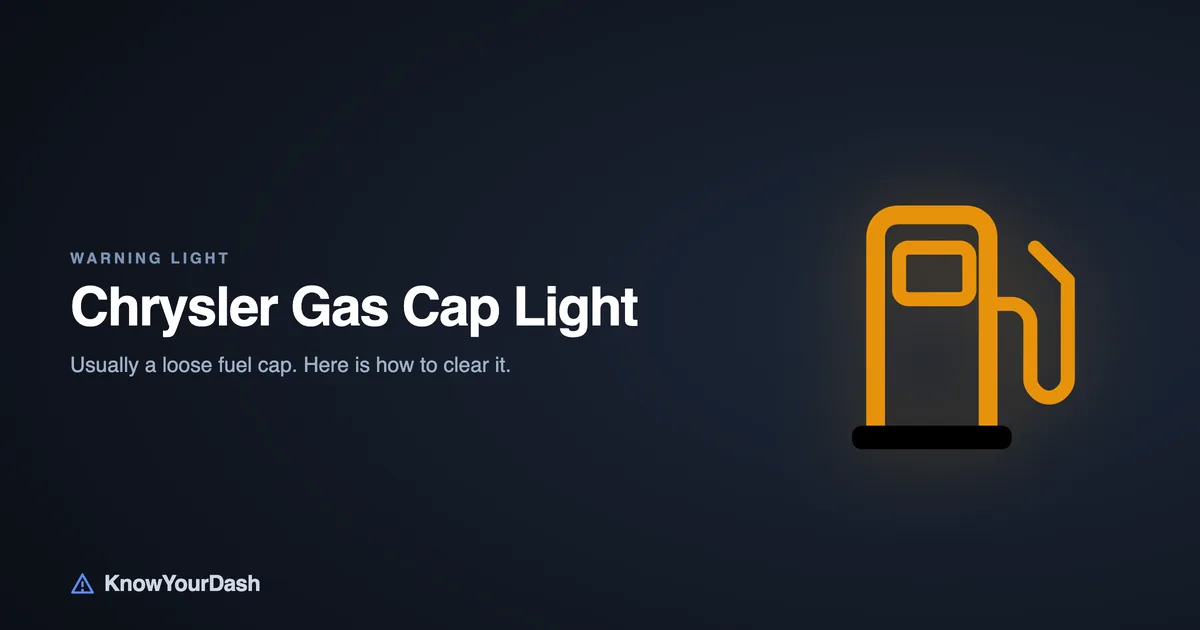
That "Check Gas Cap" or "Loose Fuel Cap" message on your Chrysler dashboard means the powertrain control module detected a large leak in the evaporative emissions system, and the most common culprit is exactly what the message says: the gas cap isn't sealing properly. The good news is this is usually a minor, cheap fix and not something that puts you or the car in immediate danger.
You can keep driving, but don't ignore it for weeks. A loose cap lets fuel vapors escape into the atmosphere, and if the problem isn't a bad cap at all, something else in the EVAP system is leaking, which can eventually trigger a full check-engine light.
Why the gas cap light comes on
Your Chrysler's EVAP system is a sealed network of hoses, valves, and a charcoal canister that traps fuel vapors so they don't vent into the air. The PCM tests this system regularly, usually when the car has been sitting for a few hours and then you start it. If it finds a leak bigger than about 0.040 inch, it logs a P0457 code ("EVAP system leak detected, fuel cap loose/off") and throws the gas cap warning.
The test often runs right after you fill up, which is why so many people notice the light on the way home from the gas station. A few things can trigger it:
- Loose cap, the most common reason by far. You may not have turned it until it clicked, or it cross-threaded slightly going back on.
- Damaged rubber seal, the O-ring inside the cap gets hard and cracked over time. An old cap that spins on fine can still leak.
- Dirty filler neck, dirt or dried fuel residue on the filler tube opening can break the seal even with a good cap.
- Genuine EVAP leak, a cracked hose, stuck purge valve, or failed canister elsewhere in the system. Less common, but possible, especially if the cap checks out fine.
How to make the gas cap light go off
Start with the simplest fix and work forward from there. Most of the time you're done after step one or two.
- Remove the cap and put it back on properly. Turn it clockwise until you hear or feel at least one click. Chrysler caps are designed to click when they're seated. If it keeps spinning without clicking, the ratchet mechanism may be worn out and the cap needs replacing.
- Inspect the cap. Look at the rubber seal inside the cap. If it's cracked, stiff, or has a flat spot worn into it, the cap won't hold pressure. A new OEM or quality aftermarket cap runs $10 to $25 at any auto parts store.
- Check the filler neck rim. Run your finger around the inside of the filler tube opening. Grit or corrosion here can break the seal. Wipe it clean with a rag. If there's rust, light sanding and a thin smear of grease can help.
- Drive a few normal cycles and wait. Even after you fix the problem, the warning won't disappear instantly. The PCM has to re-run its EVAP self-test, which happens when the car sits for a while and then goes through a normal drive. This can take two to five drive cycles, sometimes a couple of days. That's normal.
- Clear the code with an OBD-II scanner if you don't want to wait. Plug in a scanner (you can borrow one free at most auto parts stores), clear the P0457, and the light goes off right away. If the cap is actually fixed, it won't come back.
When it's not just the cap
If you've put on a brand-new cap, confirmed it clicks into place, cleared the code, and the light comes back within a day or two, the leak is somewhere else in the EVAP system. Common culprits on Chrysler and Dodge vehicles include the EVAP purge solenoid, the vent valve, or a cracked rubber hose near the charcoal canister.
At that point you need a smoke test. A shop pressurizes the EVAP system with inert smoke and watches where it comes out. It usually takes less than an hour to find and most repairs are still reasonably priced. A cracked hose is a $20 part and 30 minutes of labor. A failed purge valve is $40 to $80 and also straightforward. It's only when the leak is deep inside a canister or tank vent that costs climb.
One more thing: if your check-engine light is on alongside the gas cap message, scan it before you assume it's just the cap. You might have two separate issues, and a stored code will point you in the right direction without any guessing.
Do you need an OEM cap or will any cap work?
You don't need to buy from the dealer, but buy a cap that fits your exact year and model. Chrysler's filler necks use a specific thread pitch and the cap's internal pressure relief valve has to match what the EVAP system expects. A generic cap from a discount bin can fit loosely, fail to click, or vent at the wrong pressure and keep the light on.
Stick with brands like Stant, Motorad, or AC Delco and look up your vehicle year to make sure you're getting the right part. If you have a Chrysler 200, Town and Country, 300, or Pacifica, those caps are all slightly different. Getting the wrong one is the number one reason people replace the cap and the light comes right back.
Common questions
Is it safe to drive with the Chrysler gas cap warning light on?
Yes, you can drive normally. A loose or faulty gas cap is an emissions issue, not an engine or safety problem. That said, fix it soon. If it's not the cap and the EVAP system has a real leak, you'll eventually get a check-engine light too, which can mask other problems and may cause you to fail an emissions test.
I just filled up and the gas cap light came on. Did I do something wrong?
Probably not, but it's likely you didn't get the cap fully seated. The PCM often runs its EVAP test right after refueling, so the timing makes it look like filling up caused it. Pull over when safe, remove the cap, and reinstall it until it clicks. The light should clear on its own within a day or two of normal driving.
I tightened the cap and the light is still on. Is something broken?
Not necessarily. The warning can take several drive cycles to clear itself even after the problem is fixed, because the PCM needs to re-run and pass its EVAP leak test. Give it a couple of days. If you want it gone right away, use an OBD-II scanner to clear the P0457 code. If the cap was the only issue, it won't return.
Can a bad gas cap cause a check-engine light on a Chrysler?
Yes. If the EVAP leak goes unresolved long enough, the PCM will store a fault and illuminate the check-engine light, often for code P0457 or P0456. The gas cap message and the check-engine light can appear together or separately. Fixing the cap and clearing the codes usually takes care of both.