
John Deere Indicator Warning Lights and Codes Explained
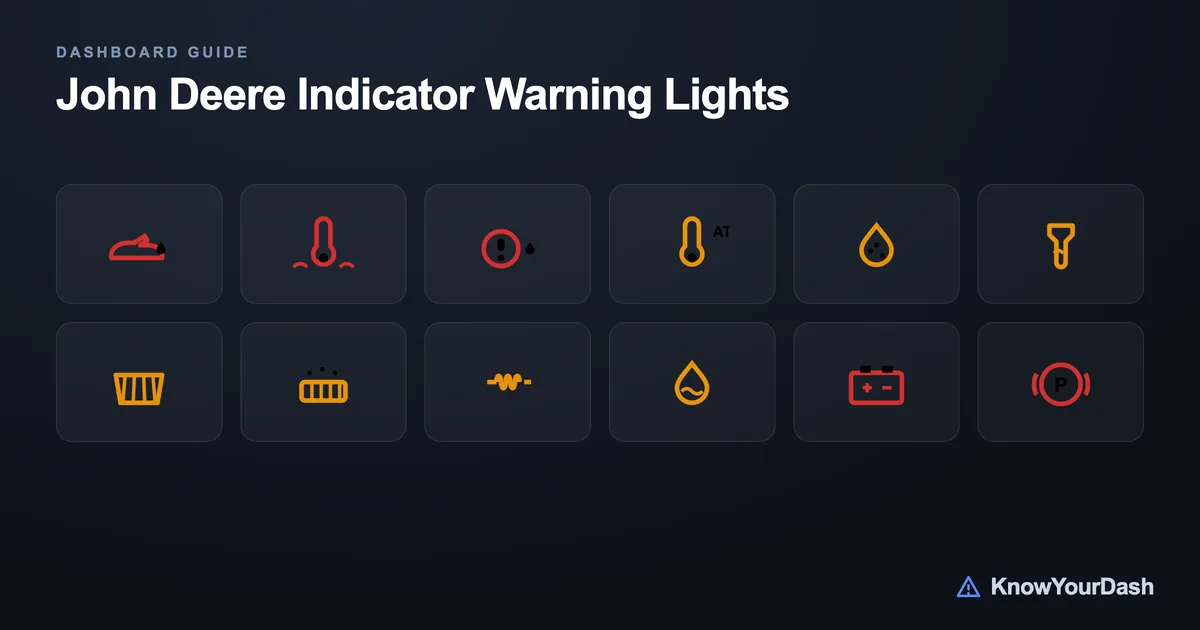
When a John Deere indicator light comes on, the dashboard is telling you one of three things: stop the engine right now, deal with this soon, or a system is active. The key is knowing which category you are in. A solid red STOP lamp means shut down immediately; an amber CAUTION lamp means you have time to finish the row and investigate, but not the whole day.
Most confusion comes from newer machines that show a numeric or alphanumeric fault code alongside the indicator lamp. This guide explains the indicator hierarchy and walks you through how to pull those codes so you can look them up in the operator manual or pass them to your dealer.
The Three-Level John Deere Alert System
John Deere divides dashboard alerts into three priority levels that apply across most tractor lines from the 5E Series right through the larger 8R machines.
- Red - STOP: A flashing red lamp with a hand or STOP text means a critical fault has been detected - low engine oil pressure, extreme coolant temperature, or a hydraulic failure. Shut off the engine, engage the parking brake, and investigate before restarting.
- Amber - CAUTION: A steady or flashing amber indicator signals a developing fault. This includes conditions like high transmission oil temperature, a clogged fuel filter, low DEF level, or an air filter restriction. The tractor will usually continue to run, but performance may be reduced.
- Green or Blue - Information: Green and blue lights are status indicators. A green PTO lamp means the shaft is spinning; a blue high-beam lamp confirms your lights are on high. These do not indicate a problem.
On machines with an Advanced Instrumentation Display (AID) or GreenStar display, a fault code in the format ECU 001234.05 or a simple number will appear alongside the indicator lamp. The prefix identifies the control unit (ECU = engine, TCU = transmission, HCU = hydraulics) and the number is the SPN/FMI code pair you can cross-reference in the technical manual.
Common John Deere Indicator Codes and Their Meaning
The table below covers the indicator lights you are most likely to see on 5, 6, and 7 Series John Deere tractors. Colors and exact icons vary slightly between model years, so treat this as a reference and always verify in your own operator manual.
Engine Oil Pressure (Low)
Oil pressure has dropped below the safe operating threshold. On many models this triggers the red STOP lamp simultaneously.
What to do: Shut off the engine immediately. Check oil level, look for leaks, and do not restart until the cause is found.
Coolant Temperature (High)
Engine coolant is overheating. Continued operation can warp cylinder heads or damage gaskets.
What to do: Stop the tractor, let it idle briefly to cool the turbo, then shut down. Check coolant level and radiator for blockage.
Hydraulic Oil Temperature (High)
Hydraulic fluid temperature has exceeded the safe limit. Often caused by a clogged hydraulic filter or heavy loader work in hot conditions.
What to do: Stop implement operation and idle the engine to allow fluid to cool. Replace the hydraulic filter if the fault recurs.
Transmission Oil Temperature
Transmission fluid is running warmer than normal. Common during heavy draft work or prolonged slipping of the transmission.
What to do: Reduce the load, slow down, and allow temps to drop. If the light stays on after reducing load, investigate the transmission oil level and cooler.
DEF / AdBlue Level Low
Diesel Exhaust Fluid is below roughly 10-15%. Tier 4 Final engines will enter reduced-power mode if DEF runs out completely.
What to do: Refill the DEF tank at the next opportunity. Do not let it run empty or the engine will de-rate significantly.
Fuel Filter / Water Separator
Water has accumulated in the fuel-water separator, or the primary fuel filter is restricting flow. Triggers a CAUTION indicator and sometimes a fault code.
What to do: Drain the water separator bowl. If the filter is also due, replace it. On 5E/6E models, hold the dash button for 5 seconds to view the specific code.
Air Filter Restriction
The air filter element has become restricted enough to reduce airflow to the engine. Left too long it can cause black smoke and power loss.
What to do: Inspect and clean or replace the air filter element. Check the pre-cleaner bowl for debris first.
DPF / Exhaust Regen Required
Soot loading in the diesel particulate filter has reached the level that requires a regeneration cycle. A flashing version of this lamp means regen is overdue.
What to do: For passive regen, operate at full load for 20-30 minutes. If the lamp flashes, initiate a parked regen from the dash menu at 1,500+ RPM.
High Exhaust Temperature (HEST)
Exhaust gases are hot during an active DPF regeneration cycle. This is a caution light, not a fault - regen is working as intended.
What to do: Keep bystanders and flammable material away from the exhaust outlet. Do not shut the engine off mid-regen.
Glow Plug / Preheat
Diesel glow plugs are heating before cold start. Normal at key-on in cold weather - the light goes out when preheating is complete.
What to do: Wait for the lamp to go out before cranking the engine. If it stays on longer than 30 seconds, a glow plug or relay may be faulty.
Water in Fuel
The water-in-fuel sensor at the separator bowl has detected water contamination in the fuel system.
What to do: Drain the separator bowl immediately. If water re-appears quickly, suspect a contaminated tank or bad fuel batch.
Battery / Charging System
The alternator is not producing adequate voltage to charge the battery. If this comes on mid-work, you may have limited time before systems fail.
What to do: Check the alternator belt tension and connections. Have the charging system tested - do not rely on the battery alone for long.
Parking Brake Engaged
The parking brake is applied or the sensor detects it as applied. On John Deere tractors this also triggers the amber CAUTION lamp when present.
What to do: Release the parking brake before moving. If the light stays on after release, check the switch or cable adjustment.
How to Pull a Fault Code on John Deere Tractors
Newer John Deere tractors (roughly 2010 onward) store fault codes you can read without a laptop. The exact steps vary by model, but the general approach on 5E and 6D/6E Series machines is:
- Turn the key to the RUN position without starting the engine.
- Press and hold the diagnostic button (usually on the left side of the steering column or instrument cluster) for about 5 seconds until the display changes.
- The display will cycle through stored active and inactive fault codes in the format XXXX.YY - the first part is the Suspect Parameter Number (SPN) and the second is the Failure Mode Indicator (FMI).
- Note all codes, then look them up in Section 04 (Diagnostics) of your operator manual, or use the John Deere Service Advisor app if your dealer has access.
On older analogue-cluster tractors (pre-2005 5000 and 6000 Series), there are no stored codes - you rely entirely on the indicator lamps and gauge readings to diagnose the fault. See our full guide to John Deere tractor warning lights for a model-by-model breakdown of what each lamp means on older machines.
If you clear a code and it immediately returns, the fault is still active. A code that stays cleared likely means an intermittent sensor issue. Kubota tractors use a similar SPN/FMI format if you operate mixed equipment.
When to Call the Dealer vs. Handle It Yourself
Many John Deere indicator codes are owner-serviceable: drain the water separator, top up the DEF, clean the air filter, replace the hydraulic filter. These are the amber-light faults that show up most often.
Call your John Deere dealer for codes tied to:
- ECU (engine control unit) faults - fuel injection, turbo, or EGR system issues that require calibration or replacement of proprietary components.
- Transmission control faults - clutch pack slipping, powershift codes, or CommandQuad errors that need hydraulic test equipment to diagnose.
- Electrical or CAN bus faults - if multiple unrelated warning lights come on at the same time, a wiring fault, bad ground, or failing control module is usually the cause. These need a scan tool to trace.
If your tractor shows a red STOP lamp with no other indicator lit, suspect a sensor failure rather than a real emergency - but always treat it as real until you have confirmed otherwise. Check oil, coolant, and hydraulic levels first before restarting. For a step-by-step reset procedure once the fault is addressed, see how to reset dashboard warning lights.
For equipment from other brands on the same farm, Massey Ferguson warning lights follow a similar red/amber color logic, which can help when running a mixed fleet.
Common questions
What does the red STOP light mean on a John Deere tractor?
The red STOP lamp signals a critical fault - most commonly low engine oil pressure, extreme coolant temperature, or a hydraulic failure. Shut off the engine right away and check fluid levels before restarting. Continuing to operate with a red STOP light active can cause catastrophic and expensive damage.
Why is my John Deere amber CAUTION light on?
An amber CAUTION light points to a developing problem that does not require an immediate stop but should be addressed the same day. Common causes include a clogged fuel or air filter, low DEF level, water in the fuel separator, or a transmission temperature rising above normal. Pull any stored fault codes from the dash to identify the specific system involved.
How do I read fault codes on my John Deere tractor without a laptop?
On most 5E and 6D/6E Series machines, turn the key to RUN without starting, then hold the diagnostic button on the steering column for about 5 seconds. The display will cycle through active fault codes as SPN.FMI pairs. Older analogue-cluster tractors from the early 2000s do not store codes - you read the indicator lamps directly. Check your operator manual for the exact button location on your model.
Can I keep working with an amber indicator light on my John Deere?
Generally yes, for a short time - amber lights indicate caution, not an immediate stop. However, ignoring them can allow a minor problem to escalate into a red-light situation. The exception is the DPF regen lamp: if it is flashing rather than solid, regen is overdue and continued work risks a blocked filter requiring dealer cleaning.
What is the difference between indicator codes and fault codes on John Deere?
Indicator codes (or lamps) are the physical warning lights on the dashboard - red, amber, or green symbols. Fault codes are the alphanumeric SPN/FMI numbers stored by the tractor's control modules that explain exactly which sensor or system triggered the indicator. The indicator tells you something is wrong; the fault code tells you specifically what and where.