
Kubota Tractor Dashboard Warning Lights and What They Mean
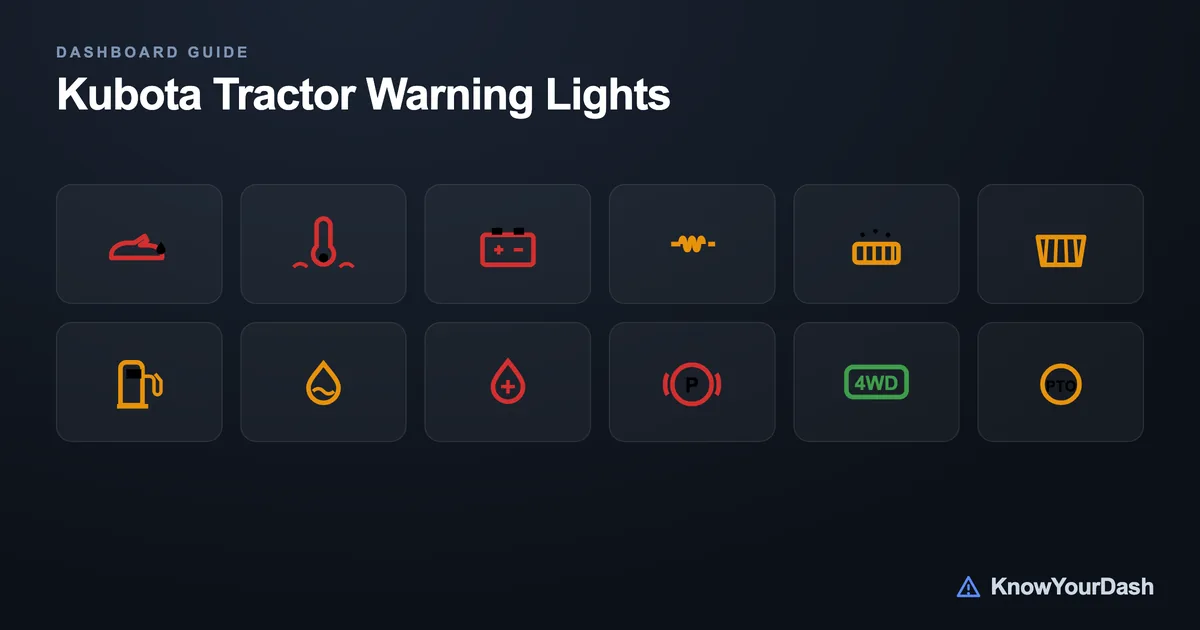
A warning light on a Kubota tractor means one of two things: stop right now or schedule a service visit soon. Knowing which is which can save an engine or just save you a trip back to the shop for nothing.
Most modern Kubota compact and utility tractors - L, M, BX and B series - share a common set of dash symbols. Red lights are critical; amber lights need attention within hours or days; green and blue lights are status indicators, not faults. Here is what each one means and what to do about it.
Kubota Dashboard Warning Light Quick Reference
The table below covers the warning and indicator lights found across Kubota L, M, BX and B series tractors. A few lights appear only on certain models - the DPF regeneration light, for example, is specific to Tier 4 Final engines with a diesel particulate filter (typically M series and larger). Check your owner manual for model-specific variations.
Engine Oil Pressure Warning
Oil pressure has dropped to a dangerous level. The engine is not being lubricated properly.
What to do: Stop the engine immediately. Check oil level; add oil if low. Do not restart until the cause is found - running further risks severe engine damage.
Coolant Temperature Warning
Engine coolant is overheating. Continued operation can warp the cylinder head or cause a blown head gasket.
What to do: Shut the tractor down. Let it cool for at least 30 minutes. Check coolant level in the reservoir when cool. Look for a blocked radiator or a failed thermostat.
Battery / Charging Warning
The alternator is not charging the battery. The tractor is running on battery power alone and will shut down when the battery drains.
What to do: Finish your current task quickly and head in. Check the alternator belt for slipping or breakage. Have the alternator and charging circuit tested.
Glow Plug / Preheat Indicator
The diesel glow plugs are heating the combustion chambers for cold-weather starting. This is a normal pre-start sequence.
What to do: Wait for the light to go out before turning the key to start. On very cold days this can take 5-15 seconds. Forcing a start early leads to hard cranking and poor combustion.
DPF Regeneration Indicator
The diesel particulate filter is performing a self-cleaning burn to clear accumulated soot. Found on Tier 4 Final engines (typically M series).
What to do: Keep working normally. The process runs automatically and finishes in 20-40 minutes. If a red alarm light accompanies this, stop and consult the manual - forced regen may be required.
Air Cleaner / Filter Warning
The air filter is clogged enough to restrict airflow. Power and fuel economy drop; unfiltered air can enter the engine if the element tears.
What to do: Stop work and clean or replace the air filter element. Kubota recommends cleaning every 100 hours. In dusty conditions check more often.
Low Fuel Warning
Fuel level is near empty. Running dry can pull sediment from the tank bottom into the injection system and may require bleeding the fuel system to restart.
What to do: Refuel soon. Do not let the tank run completely dry. If you do run out, bleed the fuel system per the owner manual before attempting to restart.
Fuel Filter / Clog Warning
The fuel filter is restricted. Fuel flow to the injection pump is reduced, causing rough running or power loss.
What to do: Replace the fuel filter as soon as possible. Kubota recommends replacement every 200-400 hours depending on fuel quality. Using clean, quality diesel extends filter life.
Water Separator Warning
Water has accumulated in the fuel water separator bowl to a level that can damage the injection pump and injectors.
What to do: Drain the water separator bowl immediately. Locate the drain screw at the bottom of the separator bowl, drain until clean fuel flows, then retighten. Investigate the source of water contamination.
Hydraulic Oil Temperature
Hydraulic fluid has exceeded its normal operating temperature. Hot fluid loses viscosity and can damage pump seals.
What to do: Reduce hydraulic load or stop work and let the system idle to cool. Check hydraulic fluid level and condition. A clogged hydraulic filter or low fluid level are common causes.
Parking Brake Engaged
The parking brake is set. This is a reminder light, not a fault.
What to do: Release the parking brake before driving. Attempting to move with the brake on causes accelerated wear on brake components.
4WD Engaged Indicator
Four-wheel drive is active. All four wheels are receiving power from the drivetrain.
What to do: No action needed - this is a status indicator. Disengage 4WD when operating on hard surfaces at road speed to avoid drivetrain wind-up and tire wear.
PTO Engaged Indicator
The power take-off shaft is turning. Any implement attached to the PTO is being driven.
What to do: No action needed - this is a status indicator. Always disengage the PTO before dismounting or when approaching people near the implement.
Differential Lock Indicator
The rear differential lock is engaged, locking both rear axles together for maximum traction.
What to do: Disengage before turning or operating on hard surfaces. Diff lock engaged while turning can bind the drivetrain and cause difficulty steering.
Service / Maintenance Due
The tractor has reached a scheduled maintenance interval - typically an oil change, filter replacement or full service check.
What to do: Schedule or perform the required maintenance. Refer to the maintenance schedule in your owner manual. Reset the indicator after service.
High Exhaust Temperature (HEST)
Exhaust gas temperatures are elevated, usually during or after a DPF regeneration cycle. The exhaust outlet is hot enough to ignite dry material.
What to do: Avoid parking over dry grass, leaves or combustible material while this light is on. The light goes out once exhaust temps return to normal. No mechanical action required.
Red Lights: Stop the Engine Now
Three lights on a Kubota tractor demand an immediate engine shutdown: oil pressure, coolant temperature, and battery/charging. Of these, the oil pressure warning is the most dangerous. A diesel engine running with no oil pressure can destroy itself within minutes - spun bearings, seized pistons, and scored cylinder walls are the typical result. The repair bill often exceeds the value of older machines.
When any red light comes on, the correct sequence is: disengage the PTO, lower any raised implements, move to a safe spot, and shut the engine off. Then investigate before restarting.
The parking brake light is technically red on most Kubota dashboards but is not a fault - it is a reminder. You will see it every time you engage the brake and it should disappear as soon as the brake is released.
Amber Lights: Service Soon
Amber lights on a Kubota give you some runway - but not unlimited time. An air filter warning caught early is a 10-minute cleaning job. Ignored for a full day of operation in dusty conditions, a torn or overstressed element can let abrasive particles into the engine, causing accelerated cylinder wear that compounds with every hour you run it.
The water-in-fuel light deserves quick attention because water in the injection system is aggressive. Modern common-rail injection components (used on Tier 4 engines) have very tight tolerances and do not tolerate water well. Drain the separator bowl at the first opportunity.
For the DPF / regen lights on larger Kubota M series machines: the amber regen indicator is routine. Think of it as the tractor cleaning its own exhaust filter. Keep working. A problem arises only if regen fails to complete - typically signaled by a red alarm or the machine entering a reduced-power mode. If that happens, a forced stationary regeneration using the switch on the dash is the next step before calling the dealer.
Green and Blue Indicators: Status, Not Faults
Green and blue lights tell you something is active or switched on. 4WD engaged (green) means front axle power is live. PTO engaged (green) means the output shaft is spinning. Neither light means anything is wrong.
On machines with high-low range transmission (the L series in particular), you may also see range position indicators - these are informational only. Glow plug preheat shows as amber during the warmup sequence but is completely normal and goes out on its own within seconds.
One practical tip for the PTO light: on older Kubota BX and L models without a bystander interlock, the PTO indicator is your only confirmation the shaft has stopped turning after disengagement. Wait for the green light to go out before approaching a connected implement.
Maintenance Intervals and the Service Light
Kubota diesel engines are built to last, but they depend on regular oil and filter changes. The standard schedule on most L and M series tractors runs like this:
- Engine oil and filter: every 200 hours (first change at 50 hours on a new machine)
- Air filter primary element: clean every 100 hours, replace every 400 hours or when damaged
- Fuel filter: replace every 200-400 hours
- Hydraulic/transmission fluid: every 300-400 hours depending on model
- Water separator: drain when warning light illuminates; inspect at every service
When the service reminder light comes on, check your manual for exactly which task is due - it varies by model. Some Kubota dashboards have separate hour meters for different service items; others use a single light tied to engine hours.
Common questions
What does the red light with an oil can symbol mean on a Kubota?
That is the engine oil pressure warning. It means oil pressure has fallen below the safe minimum. Shut the engine off immediately, check the oil level on the dipstick, and add oil if it is low. If the oil level is fine but the light stays on at startup, there may be a failing oil pump or a blocked oil passage - do not run the engine until it is diagnosed.
My Kubota has a flashing amber light during operation - what does it mean?
A flashing amber light most often indicates the DPF (diesel particulate filter) needs to regenerate on Tier 4 Final Kubota engines, or that the air filter is clogged on older models. Check which symbol is flashing against the table above. A steady amber light typically means a condition exists; a flashing amber light often signals the condition is becoming urgent and needs attention sooner.
Can I keep driving with the coolant temperature light on?
No. An overheating diesel engine can destroy the cylinder head gasket within a few minutes of the warning appearing. Shut down, let the engine cool completely (at least 30 minutes), then check the coolant level in the overflow reservoir - never open the radiator cap on a hot engine. Common causes include a blocked radiator core clogged with chaff, a failed thermostat, or a low coolant level from a slow leak.
What is the glow plug light on a Kubota and why does it come on every morning?
The glow plug light means the pre-heating system is warming the combustion chambers before startup. Diesel engines need heat to ignite fuel, and on cold mornings the glow plugs supply that heat. The light comes on automatically when you turn the key to the on position and goes out after a few seconds when the plugs are ready. Wait for it to go out before cranking. In temperatures below freezing it may take longer - this is normal.
Why does my Kubota PTO light stay on after I turn the PTO off?
On some Kubota models the PTO shaft takes a few seconds to coast down after disengagement, and the indicator stays lit until rotation stops. If the light stays on for more than 15-20 seconds after switching the PTO off, the PTO clutch may not be fully releasing. Check for a worn or misadjusted PTO clutch, and make sure no implement is creating back-drag on the shaft.
What does the water separator warning mean on a Kubota tractor?
Water has accumulated in the fuel water separator bowl. Water in diesel fuel comes from condensation in the tank, poor-quality fuel, or a contaminated fuel supply. Drain the separator bowl by loosening the drain screw at the base until clean diesel flows out, then retighten. If the warning returns quickly, the fuel source or tank may be contaminated and should be inspected.