
Honda Accord Dashboard Warning Lights and Symbols Explained
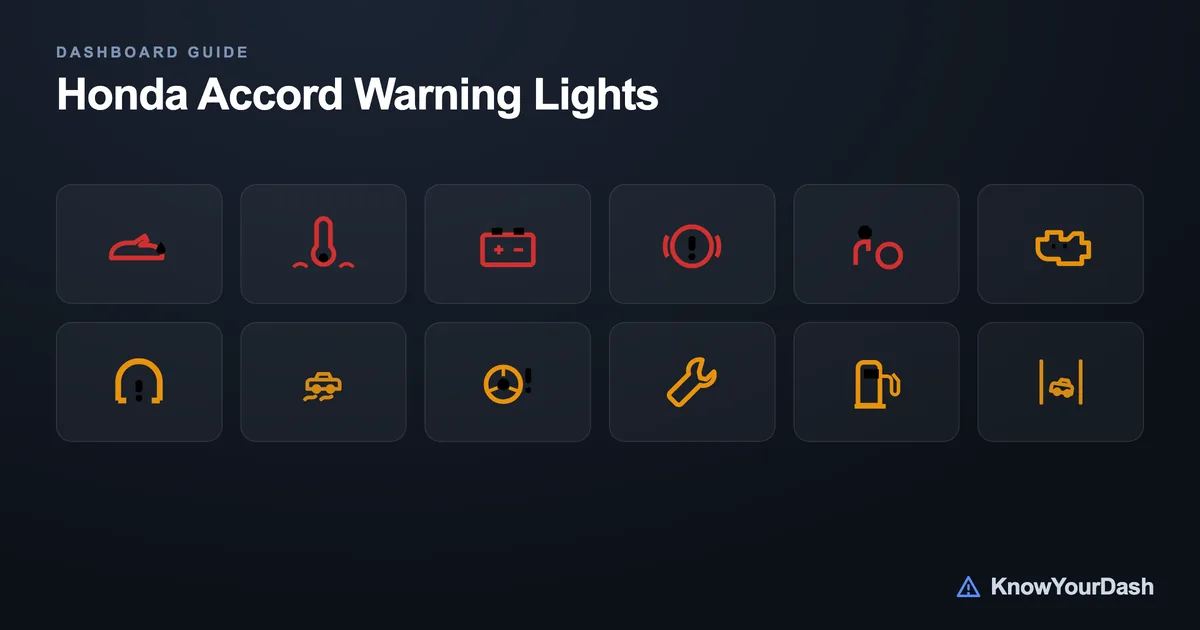
Most Honda Accord warning lights fall into three groups: red means stop or act immediately, amber means schedule service soon, and green or blue is just informational. The color alone tells you how urgently you need to respond before you even know what the symbol is.
The table below covers the Accord's most common warning lights - from the oil pressure and brake system lights that demand an immediate stop, to driver-assist indicators that simply confirm a feature is active.
Honda Accord Warning Light Symbols
Use the table below to identify what you see on the dash. The color shown is the standard Honda color for each light. If a symbol is not listed, cross-reference your owner manual or ask a Honda dealer - do not ignore any unfamiliar light.
Engine Oil Pressure
Oil pressure has dropped to a dangerous level. Continuing to drive can destroy the engine within minutes.
What to do: Pull over immediately and shut off the engine. Check the oil level on the dipstick. Add oil if low. If the level is fine and the light stays on, do not restart - call for service.
Engine Coolant Temperature
The engine is overheating. This can warp cylinder heads or cause serious internal damage very quickly.
What to do: Pull over safely, turn off the engine, and let it cool for at least 30 minutes. Check the coolant reservoir once cool. Do not open the radiator cap while hot. Have the cooling system inspected before driving further.
Battery / Charging System
The charging system is not maintaining battery voltage. The alternator or battery itself may have failed.
What to do: Head to a service shop as soon as possible - the battery may drain while driving. Turn off non-essential electrical loads. Have the alternator and battery tested.
Brake System
Either the parking brake is applied, or there is a fault in the hydraulic brake system. Low brake fluid is the most common cause.
What to do: First confirm the parking brake is fully released. If the light stays on, check brake fluid level. Low fluid can indicate worn pads or a leak - have the system inspected before driving far.
SRS / Airbag System
There is a fault in the Supplemental Restraint System. Airbags or seatbelt pre-tensioners may not deploy correctly in a crash.
What to do: Schedule dealer service promptly. The light should only stay on for a few seconds at startup during the self-test - if it remains, the system needs diagnosis.
Check Engine (MIL)
The powertrain control module has logged a fault. Causes range from a loose gas cap to an emissions sensor failure or misfires.
What to do: If the light flashes, reduce speed and load and get to a shop the same day - a flashing MIL means an active misfire. A steady amber light is less urgent; have a dealer read the fault codes.
Tire Pressure (TPMS)
One or more tires is significantly under- or over-inflated compared to the recommended PSI shown on the driver door jamb sticker.
What to do: Check all four tires with a gauge and inflate to spec. The TPMS warning resets automatically once pressures are correct and you drive briefly. If it stays on after inflating, a sensor may be faulty.
VSA (Vehicle Stability Assist)
A flashing VSA light means the system is actively working to correct a skid - this is normal on slippery roads. A steady amber light means the VSA system has a fault.
What to do: If the light flashes briefly, no action needed - the system is doing its job. A steady light means VSA is disabled; drive carefully and schedule an inspection.
Electric Power Steering (EPS)
The electric power steering system has detected a fault. Steering may feel heavier than normal.
What to do: The car is still steerable but requires more effort. Avoid high-speed driving and have the EPS system diagnosed at a dealer - the cause is often a sensor or module fault.
Maintenance Minder (Wrench)
The Maintenance Minder system has calculated that a scheduled service - oil change, tire rotation, or other item - is due based on actual driving conditions.
What to do: Schedule the indicated service soon. The display code (A, B, 1-7) identifies what is due. An oil life of 15% or lower triggers this light.
LKAS / Lane Keeping Assist
A steady amber LKAS light means the system cannot operate - usually because the front camera is blocked by dirt, frost, or bright sun, or a fault has been detected.
What to do: Clean the windshield area in front of the rearview mirror camera. If the light stays on after cleaning, have the system checked at a dealer.
CMBS (Collision Mitigation Braking)
The forward collision sensor or camera is blocked or has a fault. The automatic braking feature is temporarily unavailable.
What to do: Clean the grille-area radar sensor and the windshield camera area. A persistent amber CMBS light needs dealer diagnosis.
Low Fuel
The fuel tank has dropped to approximately one gallon remaining.
What to do: Refuel at the next available opportunity. Running the tank completely dry can damage the fuel pump on Accord models.
Immobilizer / Security
A security system fault has been detected, or the key fob battery is low. The engine may not start.
What to do: Try the other key fob if you have one. Replace the key fob battery. If neither works, have the immobilizer system diagnosed at a dealer.
Seatbelt Reminder
The driver or a front passenger has not fastened their seatbelt.
What to do: Fasten the seatbelt. The chime and light will stop.
Door / Hood Ajar
A door, hood, or trunk is not fully latched.
What to do: Pull over safely and close the door or hood fully. Driving with a door unlatched is a safety hazard.
High Beam Active
The high-beam headlights are switched on.
What to do: Informational only. Dim to low beams when approaching oncoming traffic or following another vehicle closely.
Red Lights: Stop and Act Now
The oil pressure, coolant temperature, and brake system lights are the three you never want to ignore. Running the engine with low oil pressure for even a few minutes can seize the bottom end; an overheating engine can warp the head gasket within a mile. Pull over, shut down, and diagnose before moving the car again.
The battery light is slightly different - the car will keep running on battery reserve for a short distance, but the alternator is not charging. Turn off the radio, rear defroster, and air conditioning to reduce drain, and drive directly to a shop rather than parking and restarting later.
Amber Lights: Service Needed Soon
Amber lights do not require an immediate stop, but each one is tracking a real problem. The check engine light is the most common - a loose or worn gas cap triggers it regularly on Accord models. Tighten the cap firmly after every fill-up. If that does not clear it after a drive cycle, have the fault codes read.
VSA and LKAS lights that turn amber and stay on mean the safety system is disabled. The car drives fine without them, but you lose the automatic intervention in a skid or unintended lane departure. Both systems rely on the same wheel-speed sensors and front camera, so the root cause is often shared.
The Maintenance Minder wrench is not a breakdown indicator - it just means Honda's oil-life algorithm has counted down to the service interval. Book an oil change within the next few hundred miles.
Driver-Assist Indicators Explained
Accords from 2018 onward come with Honda Sensing as standard equipment. This adds four driver-assist features, each with its own indicator:
- CMBS (Collision Mitigation Braking System) - An amber CMBS light means the radar in the lower grille or the windshield camera is obstructed. Clean the area. The system also temporarily disables itself above or below certain temperature thresholds.
- LKAS (Lane Keeping Assist) - A white LKAS light means the system is on and ready; amber means it is unavailable. The camera needs a clear view of lane markings, so heavy rain or a dirty windshield can trigger the amber state.
- ACC (Adaptive Cruise Control) - The green ACC icon on the instrument cluster shows when active. It is informational only.
- RDM (Road Departure Mitigation) - Works alongside LKAS using the same front camera. If LKAS goes amber, RDM is typically unavailable at the same time.
None of these amber Honda Sensing lights require pulling over - they signal that a convenience feature is temporarily offline, not that the car itself has a fault.
Common questions
Why did multiple warning lights come on at the same time on my Honda Accord?
A dead or weak battery is the most common reason several unrelated lights appear together. When voltage drops below a threshold, the various control modules reset and log faults simultaneously. Charge or replace the battery first, then clear the codes. If lights return individually after a normal drive, each has a separate underlying cause to investigate.
Is it safe to drive a Honda Accord with the check engine light on?
A steady amber check engine light usually means you can continue driving to a shop, but you should have the fault codes read within a day or two. A flashing check engine light is different - it signals an active engine misfire that can damage the catalytic converter within miles. Reduce speed, avoid hard acceleration, and get to a shop the same day.
What does the Honda Accord wrench light mean?
The amber wrench is the Maintenance Minder indicator. It means a scheduled service - most often an oil change - is due based on Honda's oil-life monitoring algorithm. It is not a breakdown or engine fault. The message code shown with it (A, B, and numbers 1-7) tells your service advisor exactly which jobs are needed.
How do I reset the TPMS light on a Honda Accord?
Inflate all four tires to the pressure listed on the sticker inside the driver door jamb. Drive above 25 mph for a few minutes - the TPMS sensors transmit automatically as the wheels turn, and the light clears itself. If the light stays on after correct inflation, one or more sensors may have a low battery or a fault and will need replacement.
What causes the VSA light to stay on permanently on a Honda Accord?
A permanent amber VSA light usually points to a faulty wheel-speed sensor, a steering angle sensor that needs recalibration, or a wiring issue in the ABS/VSA module. It can also appear after a battery replacement until the steering angle sensor is recalibrated by driving straight at moderate speed. If it does not clear on its own, a dealer scan will identify the exact fault code.