
Mack Truck Dashboard Warning Lights: What Each One Means
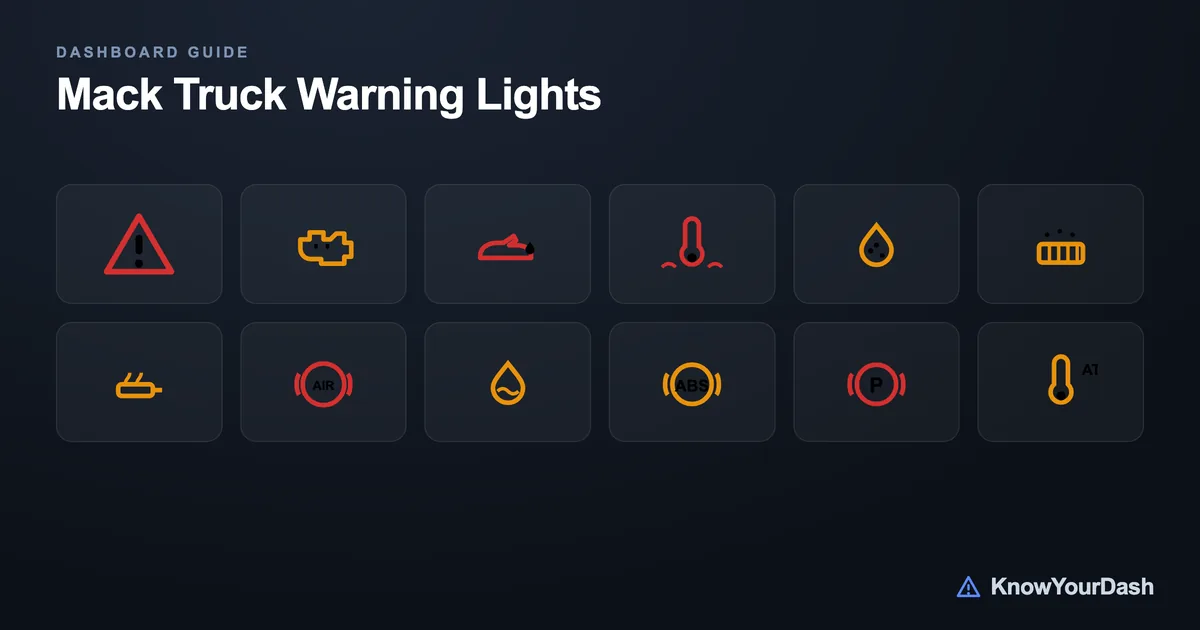
A lit warning light on a Mack Anthem or Pinnacle is the truck telling you something specific - not a random glow to ignore. Red lights call for an immediate, safe stop; amber lights mean a fault exists and you need to address it before it becomes a red-light situation; green or blue indicators are informational. This guide covers the full set, from the Stop Engine lamp to the DEF gauge, so you know exactly what action each light demands.
Mack heavy trucks use the standard J1939 indicator system shared across most Class 8 trucks, but the exact layout, labeling, and severity logic vary by model year and spec. When in doubt, pull the operator manual for your specific VIN - but the descriptions below match current Anthem and Pinnacle production trucks.
Mack Dash Warning Lights at a Glance
The instrument cluster groups lights by urgency. Red lamps sit at the top of the severity scale - they mean stop the truck safely as soon as possible. Amber lamps indicate a fault or condition that needs attention but typically allows you to finish a short run or reach a safe stop. Green and blue lamps are status indicators: a system is active, not necessarily a problem.
On the Anthem and Pinnacle clusters, the most safety-critical lights are grouped around the tachometer and a central multifunction display that also shows fault code readouts. Many faults trigger both a dash lamp and a J1939 fault code you can read with a scan tool.
Stop Engine
A critical fault - typically oil pressure, coolant temperature, or ECM-detected internal fault - has reached shutdown threshold. Engine derate or automatic shutdown may follow.
What to do: Pull off the road safely and shut the engine down immediately. Do not restart until the fault is diagnosed. Call roadside or a Mack dealer.
Check Engine (MIL)
The engine ECM has logged an active fault code. Could be anything from a sensor out of range to an emissions fault. Engine may derate if the fault is serious.
What to do: Note any performance change. Pull fault codes with a Mack-compatible scan tool or at a dealer as soon as possible.
Low Oil Pressure
Engine oil pressure has dropped below the safe minimum. On MP7/MP8 engines, normal pressure at speed is 40-90 psi; below ~15 psi at idle the light activates.
What to do: Stop safely and shut the engine off at once. Check oil level on a level surface. Do not restart until the cause is found - low pressure can destroy bearings within minutes.
High Coolant Temperature
Coolant temperature has exceeded safe limits - above roughly 108 C (226 F) on MP-series engines. ECM may derate or initiate shutdown to protect the engine.
What to do: Stop safely, shut down, and let the engine cool. Check coolant level only when cool. Investigate thermostat, water pump, or coolant leak before restarting.
DEF / AdBlue Low
Diesel Exhaust Fluid level is low. Mack trucks will derate engine power progressively as DEF runs out - eventually limiting road speed to 5 mph until refilled.
What to do: Refill DEF tank at the next available stop. Use only ISO 22241-compliant fluid. The light clears automatically once level is adequate.
DPF / Regen Required
The diesel particulate filter is loaded with soot and needs regeneration. A flashing or solid lamp indicates urgency - a flashing lamp means the filter is nearly full and power derate is imminent.
What to do: If solid, drive at highway speed when possible to trigger a passive regen. If flashing, find a safe spot to perform a parked (stationary) regen using the cab switch. Do not ignore a flashing DPF lamp.
HEST - High Exhaust System Temperature
Exhaust gas temperature has reached 300 C (572 F) or higher, typically because active DPF regeneration is underway. This is normal during a regen cycle.
What to do: During a parked regen, keep bystanders and flammables away from the exhaust outlet. The lamp goes out when regen completes. If HEST lights up with no regen in progress, investigate an aftertreatment fault.
Low Air Pressure
Air pressure in the brake system has dropped below approximately 60 psi. An audible buzzer also sounds. Normal operating range is 110-130 psi. Below 60 psi, spring brakes may apply automatically.
What to do: Pull over safely and stop immediately. Do not attempt to drive with low air pressure - you may lose braking ability. Leave spring brakes set and call for service.
Water in Fuel
The fuel/water separator sensor has detected water in the fuel system. Water in diesel can damage injectors and cause misfires or no-starts.
What to do: Drain the fuel/water separator bowl as soon as possible. Most Mack trucks have a manual drain valve on the filter housing. Replace the separator element if contamination was significant.
Parking Brake Engaged
The parking/spring brake valve is in the set position. The truck will not move safely while this is active.
What to do: Release the yellow-knob parking brake valve in the cab before moving. If the light stays on while the valve is released, there is a brake system fault to investigate.
ABS Fault
The Anti-lock Braking System on the tractor has detected a fault - typically a wheel speed sensor, modulator valve, or ECU issue. Normal braking still works, but ABS function is disabled.
What to do: Service as soon as possible - ABS is required for safe operation in emergency stops and for federal compliance. A separate trailer ABS lamp covers the trailer circuit.
Battery / Charging System
Alternator output is low or the charging system has a fault. Voltage below about 12.5V (engine running) will trigger this. The 12V or 24V system may drain, eventually killing the truck.
What to do: Check belt tension and alternator connections at the next stop. If the light comes on while driving, reduce electrical load and head to a shop - a dead battery can strand a fully loaded truck.
Transmission Temperature High
Transmission fluid is overheating, often from extended downhill grade braking, heavy towing in low range, or low fluid level. On automated transmissions like the mDrive, this can trigger a fault code.
What to do: Reduce load or speed. If on a grade, use the exhaust brake to reduce transmission slip. Pull over and idle if temperature does not drop. Check fluid level and condition at the next inspection.
Engine Derate / Powertrain Fault
A powertrain fault - often an aftertreatment, fuel system, or turbo issue - has caused the ECM to limit engine output. You may notice reduced throttle response or a speed cap.
What to do: Pull fault codes to identify the specific fault. Derate protects the engine but means the truck is not running at full capacity. Do not load or push a derated truck without knowing the root cause.
High Engine Oil Temperature
Engine oil temperature has exceeded normal operating limits. This can happen under sustained high load, during summer operation, or if the oil cooler is fouled.
What to do: Reduce engine load. Check that the cooling system is working properly and that the oil level and quality are correct. Prolonged high oil temp accelerates wear on internal engine components.
Engine Brake / Retarder Active
The engine compression brake (Jake brake) or exhaust brake is currently active and providing engine braking on downhill grades.
What to do: Informational - no action required. The system disengages automatically when the throttle is applied or the truck accelerates.
Wait to Start / Preheat
The engine is preheating before a cold start. On MP-series diesels this is typically brief - under 30 seconds in most temperatures.
What to do: Wait until the lamp goes out before cranking the engine. Starting before preheat completes can cause hard starts and white smoke in cold weather.
Stop Engine vs. Check Engine - Know the Difference
Stop Engine (red): This is the most serious light on the dash. It activates when oil pressure, coolant temperature, or an ECM-detected internal fault crosses a shutdown threshold. On some configurations, the ECM will automatically derate the engine to idle and then shut it down after a countdown. Do not try to push through a Stop Engine condition - internal engine damage from low oil pressure or overheating can occur in under two minutes.
Check Engine (amber, also labeled MIL - Malfunction Indicator Lamp): This signals a logged fault code but does not necessarily mean stop immediately. Common triggers on Mack trucks include aftertreatment sensor faults, EGR issues, turbo vane position faults, and NOx sensor failures. The engine may run normally or slightly derated. Pull codes at a dealer or with a Mack PTT (Premium Tech Tool) compatible scanner to find the specific SPN/FMI fault code.
Aftertreatment Lights - DEF, DPF, and HEST
Modern Mack MP7, MP8, and MP10 engines use a full aftertreatment system - EGR, DPF, SCR catalyst, and DEF injection - to meet EPA emissions standards. This system generates the most common amber warning lights in day-to-day operation.
- DEF low: Mack begins a derate sequence when DEF runs out. First comes a speed cap, then a 5 mph limit if the tank empties completely. Refilling clears the condition automatically.
- DPF regen: A solid amber lamp means a manual or forced regen is coming up. A flashing lamp means the filter is critically loaded - stop and perform a parked regen using the dash-mounted regen switch. Ignoring a flashing DPF lamp can result in DPF replacement, which costs several thousand dollars.
- HEST: Normal during any active regen. The exhaust outlet on a Mack during regen can reach 600 C or higher - keep away from flammable materials and instruct bystanders to stay clear of the exhaust stack area during a stationary regen.
Air Brake and Brake System Lights
Air brakes are fundamental to Class 8 truck safety and have their own dedicated warning system. Normal operating air pressure on a Mack is 110-130 psi. Two separate circuits - front and rear - are fed from separate tanks, so a gauge drop in one circuit points to that circuit's leak.
The low air pressure buzzer and red lamp trigger below 60 psi. At this point spring brakes on the rear axle will apply automatically if pressure drops further. This is a safety feature, not a malfunction - but it means the truck will stop moving. Pull over safely before pressure drops to the point of spring brake application. Investigate for air leaks at glad hands, brake chambers, or lines before attempting to rebuild pressure.
The ABS lamp is separate. ABS failure does not eliminate brake function, but it does disable the anti-lock modulation that prevents wheel lockup. On slippery roads this matters. Federal regulations require functional ABS on tractors, so an ABS fault needs repair before the next inspection.
Common questions
What does the red lightning bolt mean on a Mack truck dash?
The lightning bolt symbol on a Mack typically indicates an electronic throttle control or ECM/powertrain electronics fault. It is often accompanied by a derate condition where the engine limits speed or power. Pull fault codes with a Mack-compatible scan tool to identify the specific SPN/FMI code before driving further.
Can I keep driving with the amber Check Engine light on?
Usually yes for a short distance, but you should pull codes as soon as possible. Some amber faults are minor sensor issues; others indicate emissions system problems that will escalate into a derate or a Stop Engine condition if ignored. Do not continue a long haul with an active amber fault you have not identified.
Why does my Mack go into limp mode with a speed cap?
Speed or power caps (derate) on Mack trucks are almost always triggered by emissions system faults - most often low DEF, a failed DEF quality sensor, a DPF that needs regen, or a NOx sensor fault. The ECM limits power to protect the aftertreatment system and to stay within EPA compliance limits. Refill DEF first, then pull fault codes if the cap remains.
What should I do if the low air pressure buzzer goes off while driving?
Signal, move to the right, and stop safely as quickly as you can without hard braking. Do not attempt to outrun the pressure loss. Once stopped with the parking brake set, leave the truck in park and do not move it until the air system is repaired and pressure is fully rebuilt. Driving on low air risks total brake failure.
How do I reset warning lights on a Mack Anthem after fixing the fault?
Most lights clear automatically once the fault is repaired and the ignition is cycled. Persistent lights that do not clear on their own - especially MIL/check engine - usually mean the fault code is still active in the ECM. Use Mack PTT software or a J1939-compatible scanner to clear stored codes after the repair is confirmed.