
Range Rover Dashboard Warning Lights - What Each One Means
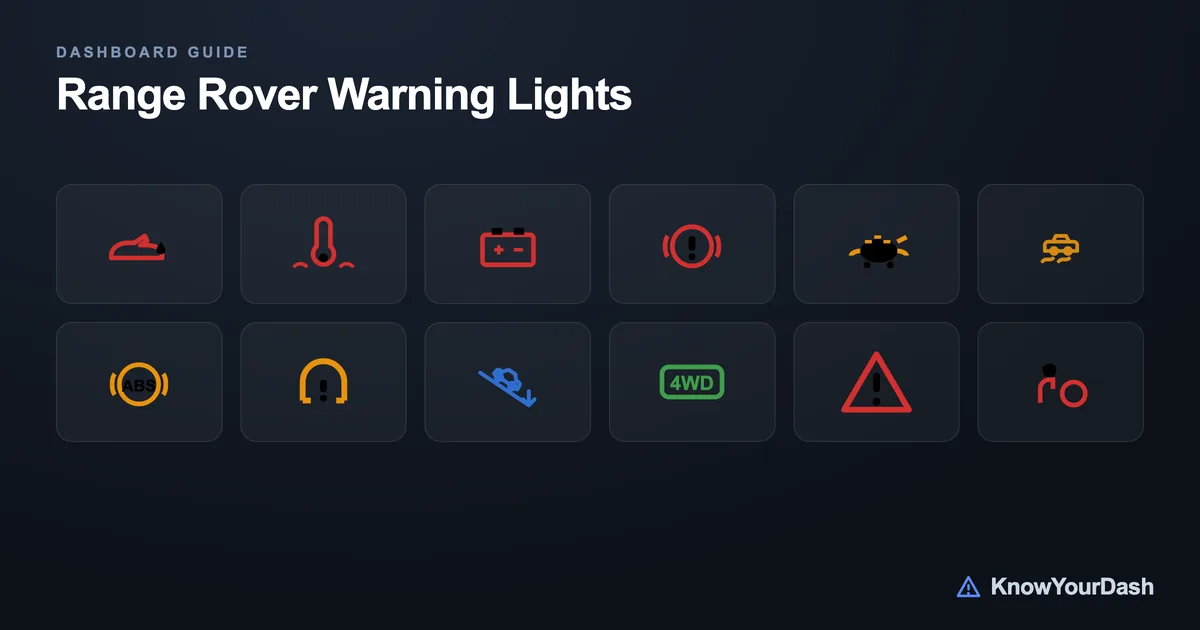
A Range Rover dashboard can show dozens of different warning lights, and the color tells you how urgently to act: red means stop as soon as it is safe to do so, amber means schedule a workshop visit soon, and green or blue simply means a feature is active. The lights below cover the most common symbols across Range Rover Sport, Range Rover Vogue, and Range Rover Evoque - all generations share most of the same indicators.
If a red light appears alongside a chime, pull over, switch off the engine, and call Land Rover Assistance. Never ignore oil pressure or coolant temperature warnings - driving even a short distance with either lit can destroy the engine.
Range Rover Warning Lights at a Glance
The table below lists the 18 most common Range Rover dashboard symbols. Each row shows the real light name Land Rover uses, the color it appears in, what it means, and the correct first action to take.
Engine Oil Pressure
Oil pressure has dropped below the safe minimum. The engine is not being lubricated properly.
What to do: Stop safely immediately, switch off the engine. Do not restart. Check oil level - if low, top up and check for leaks. Call for recovery if pressure does not stabilise.
Engine Coolant Temperature
Engine coolant is critically hot. Continued driving risks warped cylinder heads or a seized engine.
What to do: Pull over safely, switch off the engine, and let it cool for at least 30 minutes. Check coolant level only when cool. Do not remove the pressure cap while hot.
Battery / Charging System
The alternator is not charging the battery, or the battery voltage is critically low. The vehicle may cut out within minutes.
What to do: Reduce electrical load (turn off AC, heated seats, radio). Drive directly to a workshop or call for assistance - the vehicle may not restart once switched off.
Brake System Warning
Brake fluid is low, there is a brake circuit fault, or the parking brake is still applied.
What to do: First confirm the parking brake is fully released. If the light remains, do not drive - loss of braking is possible. Check brake fluid level; if low, call a workshop.
Red Master Warning
A critical fault has been detected. The instrument cluster will display a text message describing the specific problem.
What to do: Read the text message on the driver display, then act accordingly. If in doubt, stop safely and call Land Rover Assistance.
Restricted Performance
The ECU has detected a fault and limited engine power to prevent damage - sometimes called limp-home mode. Common causes include a throttle body fault, air intake sensor failure, or transmission overheating.
What to do: Drive gently to the nearest workshop. Connect a diagnostic scanner to read fault codes before attempting any repairs - the root cause is rarely visible to the eye.
DSC / Traction Control Fault
A fault has been detected in the Dynamic Stability Control or traction control system. The most frequent cause is a failed wheel speed sensor or corroded ABS ring.
What to do: The vehicle can be driven carefully, but stability assistance is reduced. Have fault codes read at a workshop. A flashing version of this light during cornering is normal - it shows DSC actively intervening.
ABS Warning
The Anti-lock Braking System has a fault. Normal braking still works, but ABS will not prevent wheel lock-up during hard stops.
What to do: Drive to a workshop. ABS and DSC faults often appear together because they share wheel speed sensors. Have fault codes read to pinpoint the failed sensor.
Airbag / SRS Warning
A fault in the Supplemental Restraint System. Airbags or seatbelt pre-tensioners may not deploy in a collision - or could deploy unexpectedly.
What to do: Do not attempt to repair airbag components yourself. Book the vehicle into a Land Rover specialist who has the correct SRS diagnostic equipment.
Tire Pressure (TPMS)
One or more tires are at least 25% below the recommended inflation pressure. The TPMS display will identify which wheel is affected.
What to do: Pull over when safe, check all four tires, and inflate to the pressures shown on the door jamb sticker. If a tire is visibly flat, fit the spare or call for assistance.
Power Steering Fault
The electric power steering system has detected a fault. Steering may feel very heavy, especially at low speeds and when parking.
What to do: The vehicle can be driven, but steering effort is greatly increased. Avoid motorway speeds if possible and book in for diagnosis - a faulty steering angle sensor or EPS motor is the usual cause.
Suspension Warning
A fault has been detected in the air suspension system. The vehicle may be sitting lower than normal or the height cannot be adjusted.
What to do: Avoid rough terrain or off-road use. Do not exceed 50 mph. Book into a workshop promptly - air suspension faults on Range Rovers can be caused by a failed compressor, a perished air bag, or a faulty height sensor.
Service Required / Powertrain Warning
A scheduled service is due, or a non-critical powertrain fault has been logged. The instrument cluster message clarifies which applies.
What to do: If it is a service reminder, book in within a few weeks. If a fault message accompanies it, have codes read sooner.
Glow Plug / Preheat (Diesel)
On diesel Range Rovers, this light glows amber at start-up while the glow plugs heat the combustion chambers. It should go out within a few seconds.
What to do: Wait until the light goes out before cranking the engine in cold weather. If it stays on after the engine starts, one or more glow plugs may have failed - book a service.
Immobiliser / Security
The engine immobiliser is active and the key has not been recognised. The engine will not start.
What to do: Ensure you are using the correct key fob for this vehicle. Try the spare key. If neither works, the key transponder or the BCM may need reprogramming - contact a Land Rover dealer.
Hill Descent Control (HDC) Active
Hill Descent Control is switched on and ready. The system uses the brakes to hold the vehicle to a set low speed on steep descents without driver brake input.
What to do: No action required - this is a normal confirmation that HDC is engaged. The light flashes amber if HDC is active but conditions are not steep enough to trigger it.
Terrain Response System
The Terrain Response dial or system is active and a specific terrain programme has been selected (for example: Grass-Gravel-Snow, Mud-Ruts, or Rock Crawl). The dash may also show the programme name.
What to do: No action required. This confirms the selected terrain setting is in use. Return the dial to General Driving on normal roads to restore standard settings.
Electric Parking Brake / Park
The electric parking brake is applied, or it has detected a fault. Some Range Rover models show this in amber when a fault is present.
What to do: If the vehicle is stationary, this is normal. If it stays lit while driving, stop safely - the parking brake may be partially applied, or there is an EPB fault that needs a workshop visit.
Red Lights: Stop Immediately
On a Range Rover, any red warning light is an instruction to stop safely as soon as traffic allows. The three most dangerous ones are oil pressure, coolant temperature, and battery. Oil pressure loss can seize a Range Rover's engine within two or three miles. Coolant overheating can warp cylinder heads, and the repair bill routinely exceeds the vehicle's value on older examples.
The red brake warning is the fourth critical red light. If it comes on while moving and the parking brake is already released, your brake fluid may have dropped too low for safe stopping. Pump the brakes to check for firmness, then pull over and call for help rather than driving further.
Land Rover's red master warning light is a catch-all that always pairs with a text message on the instrument cluster. Read the message, then decide whether to stop immediately or drive to a workshop.
Amber Lights: Service Soon
Amber lights mean a fault has been logged but the vehicle is not immediately dangerous to drive. That said, 'service soon' does not mean 'ignore for months.' The most common amber lights on a Range Rover are DSC fault, ABS fault, restricted performance, and tire pressure.
The DSC and ABS lights often illuminate together. Both systems rely on the same wheel speed sensors, and a single corroded or broken sensor triggers both. A scan tool will identify exactly which corner is at fault, saving time and money on diagnosis.
Restricted Performance (also called limp-home mode) is Range Rover specific in how often it appears. Common triggers include a throttle body build-up of carbon deposits, a faulty mass airflow sensor, or a transmission temperature spike after towing. The ECU cuts power intentionally - it is protecting the engine, not failing. Always read fault codes before replacing parts.
The air suspension warning deserves attention quickly on air-sprung Range Rovers. Driving with a deflated air bag puts the load onto the bump stops and can damage the suspension geometry and bodywork.
Off-Road Indicator Lights (Normal in Use)
Range Rovers have several dashboard lights that look alarming but are entirely normal during off-road use or when certain driving modes are active.
Terrain Response shows a green indicator and usually displays the active programme name ('Rock Crawl', 'Mud-Ruts', 'Sand', 'Snow'). When you return to tarmac, rotate the dial back to General or Auto to cancel.
Hill Descent Control (HDC) glows green when the system is on and the gradient is steep enough to be active. It flashes amber when you have switched HDC on but the hill is not steep enough to engage the system - this is normal and not a fault.
The Terrain Response fault light (an amber version of the system icon) means a sensor or actuator in the system has failed. The vehicle will revert to a default calibration and Terrain Response will not switch programmes - have it diagnosed at a workshop.
Glow Plugs, Security, and Other Lights
Diesel Range Rovers (TDV6, SDV8, and D series engines) show a glow plug light at cold starts. The coil-spring amber symbol lights for two to ten seconds, then goes out. Only crank the engine once it is off. If it stays on after the engine has been running for several minutes, book a glow plug test - a dead plug causes hard cold starts and can cause misfires.
The immobiliser red light (a car outline with a padlock or key symbol) means the ECU does not recognise the key transponder. Try the spare key. If that also fails, the fault is usually a dead key fob battery, a damaged transponder chip, or a corrupted security module - a Land Rover dealer can reprogram it.
The tire pressure warning activates when a tire drops 25% or more below its target inflation. Range Rover Sport and L405 onwards have an on-screen display that names the specific wheel, so you do not have to guess. Recheck pressures after driving a short distance following inflation, as TPMS sensors sometimes need a minute of movement to update their reading.
Common questions
What does the Range Rover restricted performance warning mean?
Restricted Performance (also called limp mode) means the engine ECU has detected a fault and deliberately reduced power output to protect components. Common causes include a carbon-clogged throttle body, a faulty mass airflow sensor, or transmission overheating after heavy towing. Drive gently to a workshop and have the fault codes read before replacing any parts - the ECU logs the exact fault code that triggered the mode.
Why are my Range Rover DSC and ABS lights on at the same time?
Both systems share wheel speed sensors, so a single failed sensor triggers both warning lights simultaneously. The usual culprit is a corroded ABS reluctor ring (the toothed ring the sensor reads) or a broken wire near a wheel. A diagnostic scanner will tell you which corner is at fault - rear sensors are more common failures on Range Rovers due to brake dust build-up.
Is it safe to drive with the Range Rover air suspension warning light on?
You can drive carefully to a workshop, but avoid off-road use, speed bumps, and high speeds. Keep it under 50 mph. If the vehicle is sitting noticeably low on one corner, a bag may have ruptured - driving on a deflated air bag damages the suspension bump stop and can cause body contact with the wheel. Get it recovered rather than driven if a corner is visibly dropped.
What is the Range Rover hill descent control (HDC) light?
A solid green HDC light means the system is on and actively controlling speed on a descent. A flashing amber HDC light means you have switched HDC on but the gradient or speed conditions are not met - this is not a fault. If HDC shows an amber fault warning at all times, a sensor or brake actuator issue has been logged and the system has defaulted off.
Why does the Range Rover glow plug light stay on?
On a diesel Range Rover, the glow plug light should glow amber for a few seconds at cold start and then go out. If it stays on after the engine has warmed up, one or more glow plugs have failed or there is a fault in the glow plug relay or wiring. Failed plugs cause hard cold starts and misfires but will not damage the engine if addressed within a few weeks.