
Mini Cooper Triangle Warning Light - What That Symbol Is Telling You
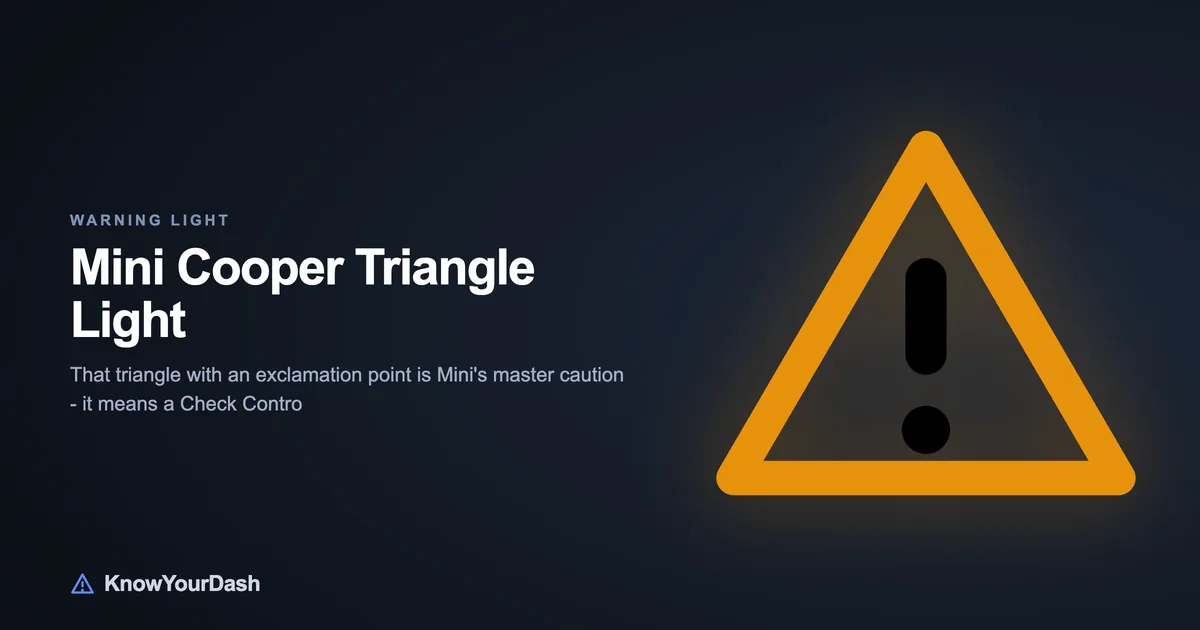
The triangle with an exclamation mark on your Mini Cooper dashboard is the Check Control master caution light. By itself it does not describe a specific fault - it tells you that another warning or informational message has been stored and is waiting for you to read it. Think of it as the messenger, not the message itself.
Color matters a great deal here. A yellow triangle means something needs attention soon but you can keep driving. A red triangle means a serious problem that could cause damage or a safety issue - pull over when it is safe to do so and deal with it before driving further.
What the triangle actually does
Mini uses a Check Control system to monitor dozens of vehicle functions. When the system detects anything outside normal parameters, it stores a message and lights the triangle to get your attention. The triangle itself carries no specific meaning - it is always paired with either a second warning symbol on the dashboard or a text message in the instrument display. Reading that companion message is the only way to know what is actually wrong.
On older Minis you scroll through Check Control messages by pressing the button at the end of the turn signal stalk. On newer models with a touchscreen, go to Vehicle Info > Vehicle Status > Check Control to read what is stored.
Yellow triangle vs. red triangle
The color is the single most important piece of information the triangle gives you.
- Yellow (amber) triangle - something is not working correctly or needs your attention, but the situation is not immediately dangerous. Common yellow triggers include low tire pressure, low washer fluid, ASC/DSC turned off, date and time needing to be set, or a minor sensor fault. You can drive to a safe location and address it.
- Red triangle - a serious or potentially dangerous condition. Brake fluid low, engine overheating, or another critical system fault. Stop driving as soon as it is safe and do not continue until the cause is resolved.
If the triangle is flashing rather than steady, that usually means the stability or traction control system is actively working to keep the car stable on a slippery surface - that is normal behavior and the light stops flashing once the situation settles.
Check Control Master Caution (yellow)
A Check Control message has been stored; a non-urgent issue requires your attention.
What to do: Read the companion message on the display and address the cause when convenient.
Check Control Master Warning (red)
A serious fault has been detected that could damage the vehicle or create a safety hazard.
What to do: Stop the vehicle safely as soon as possible and do not drive further until the fault is identified and resolved.
The most common reasons your triangle comes on
These are the faults Mini owners report most often behind that triangle light:
- Tire pressure (TPMS) - one or more tires is significantly under-inflated. Inflate to the pressures listed on the door jamb sticker, then reset the system via Vehicle Info > Vehicle Status > Perform Reset and drive for a few minutes.
- ASC/DSC turned off - the Automatic Stability Control or Dynamic Stability Control has been switched off, intentionally or by accident. Pressing the ASC button to re-enable it clears the message.
- Low brake fluid - if the triangle is paired with a brake warning, check fluid level immediately. Do not drive if the brake fluid is genuinely low; you may have a leak.
- Low washer fluid - minor, top up the reservoir.
- Date/time not set - after a battery disconnect the clock resets to 00:00. Set the time through the infotainment display and the message clears.
- Wheel speed sensor fault - if the triangle appears alongside ABS and brake lights at the same time, a wheel speed sensor or ABS module is the likely culprit. This needs a scan tool to diagnose.
If you own a Mini with stability control and the triangle shows up with a traction-related light, see the exclamation point in triangle guide for more context on how these master caution symbols work across brands.
How to clear the triangle light
The triangle clears on its own once the underlying fault is corrected. There is no stand-alone reset button for the Check Control triangle. What you need to do is fix the root cause:
- Tighten a loose fuel cap and drive a trip or two.
- Inflate low tires and perform the TPMS reset from the vehicle menu.
- Re-enable ASC/DSC if it was switched off.
- Top up fluids if the message points to low washer fluid or brake fluid.
If you have corrected the obvious cause and the light is still on after a day of driving, connect an OBD-II reader to pull the stored fault codes. That gives you the specific system involved rather than relying on the generic triangle. For a full walkthrough of clearing dashboard lights after a repair, see how to reset dashboard lights step by step.
On early-2000s Minis a persistent yellow triangle with no obvious cause can sometimes trace back to a faulty ABS wheel speed sensor sending intermittent signals. The fix is sensor replacement, typically a straightforward job for a shop with Mini experience.
Common questions
Can I drive with the yellow triangle warning light on?
Yes, a yellow triangle is a caution, not an emergency. Read the Check Control message to understand what triggered it, then address it as soon as convenient. If the triangle is red, stop driving when it is safe to do so.
Why is the triangle light on with no other warning?
On some models the companion message may only appear briefly when the fault first occurs. Scroll through your Check Control messages via the turn signal stalk or the infotainment menu - the stored message should still be there even if a second light is not currently lit.
Does a flashing triangle mean something worse than a solid one?
Not necessarily worse - it means something different. A steady solid light means a stored fault. A flashing triangle typically means the stability control system is actively intervening on a slippery surface; once you regain traction the flashing stops. If it flashes continuously on dry pavement, that points to a sensor fault.
My Mini triangle light came on right after filling up. Is that the gas cap?
Very likely. If the cap was not tightened fully after refueling, the EVAP system detects a pressure drop and stores a fault. Re-tighten the cap until it clicks and drive normally for a trip or two - the message should clear on its own. The same situation on a Chrysler product is covered in the Chrysler gas cap warning light guide.
The triangle and ABS light came on together. What does that mean?
Both ABS and stability control share wheel speed sensor data. When one sensor fails or sends a bad signal, both systems lose confidence and both warning lights come on. The fix is an OBD scan to confirm which sensor is at fault, then replacement of that sensor.