
Case Skid Steer Warning Lights and Symbols Explained
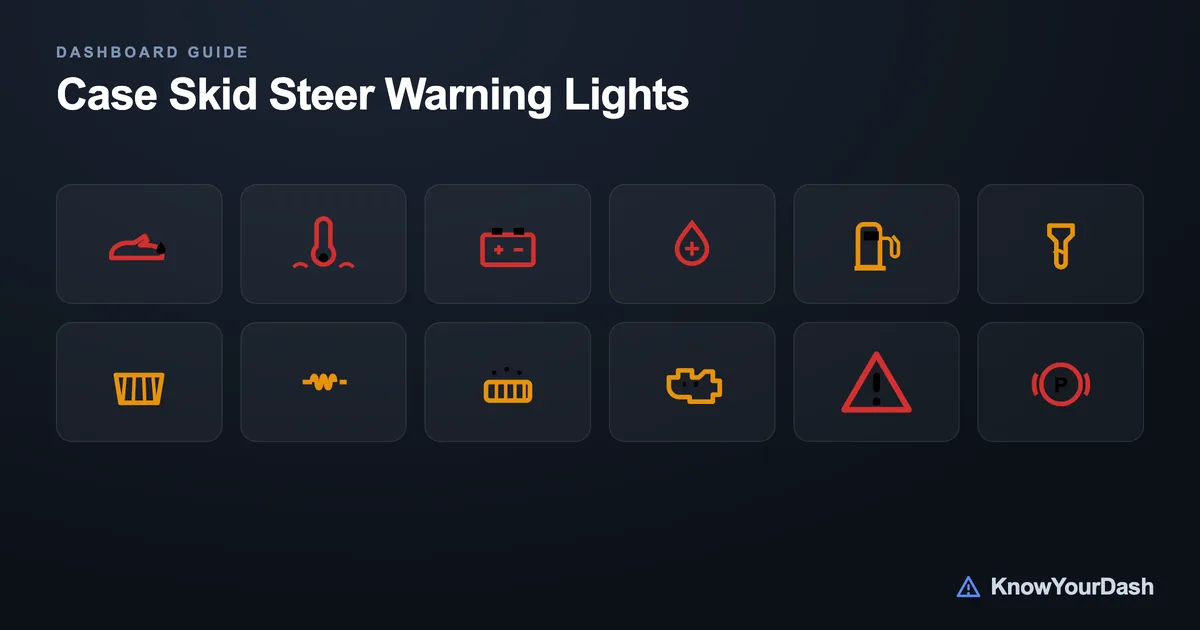
Case skid steers across the SR, SV and TV series use a multifunction instrument cluster that flags everything from low oil pressure to active DPF regeneration. Most amber lights mean slow down and investigate; red lights mean stop the machine now and shut the engine off.
This guide covers the real warning lights found on Case SR130 through TV380 models. Knowing what each symbol means - and what to do the moment it lights up - is the difference between a 15-minute fix and a full engine rebuild.
Case skid steer warning light quick-reference
Case SR and SV series skid steers (including the SR130, SR150, SR175, SV185, SR200, SR210, SR220, SR250, SV250, SV280 and SV300) share a common instrument cluster layout. The TV and TR tracked models (TR270, TR320, TV380) use the same symbol set. Here is every light you are likely to encounter, with its real meaning and the correct response.
For a broader look at compact construction machine gauges, the JCB loader warning lights guide covers a closely related set of symbols.
Engine Oil Pressure
Engine oil pressure has dropped below the safe operating threshold. Oil is not reaching critical bearing surfaces at the required pressure.
What to do: Stop the engine immediately. Do not idle it down - switch off now. Check oil level with the dipstick. If oil is full and pressure still reads low after a restart, do not operate the machine - have the oil pump, pressure relief valve and sending unit inspected before returning to work.
Coolant Temperature
Engine coolant is above the maximum safe operating temperature. Continued operation will cause head gasket failure, warped cylinder heads or seized pistons.
What to do: Lower the boom, set the parking brake, idle the engine for 2 minutes to stabilize temperature, then shut down. After cooling, check coolant level, inspect the radiator and cooler stack for debris blockage, and check the fan drive belt. Do not remove the radiator cap while hot.
Battery / Charging
The alternator is not maintaining charge voltage. Battery voltage has dropped below the normal 13.5-14.5 volt range while the engine is running.
What to do: Check the alternator belt for slack or cracking. Inspect battery terminals for corrosion. If the belt and connections are good, have the alternator output tested. The machine will run on battery reserve for a limited time, but do not leave it idling unattended - it will not restart if the battery drains fully.
Hydraulic Oil Temperature
Hydraulic fluid temperature has exceeded the maximum limit, typically around 93 degrees C (200 F). Overheated fluid breaks down rapidly and damages pump seals and valve bodies.
What to do: Stop cycling the hydraulic functions and idle the engine with the boom lowered. Allow the fluid to cool - most Case machines have a return-line cooler ahead of the main cooler stack. If the light keeps returning during normal work, check for a blocked hydraulic oil cooler, low fluid level or a stuck thermostat in the hydraulic circuit.
Low Fuel
Fuel level has dropped to the reserve threshold, typically around 10-15 percent of tank capacity.
What to do: Refuel before continuing work. Running a diesel skid steer out of fuel introduces air into the injection system; bleeding the fuel system after a run-dry is a time-consuming job on common-rail engines. Keep the tank above one-quarter to prevent sediment at the bottom of the tank from entering the filters.
Hydraulic System Pressure
Hydraulic system pressure has fallen below the minimum required for safe operation of the lift arms and bucket. On Case machines this often accompanies a hydraulic oil temperature warning on heavily worked machines.
What to do: Lower the attachment to the ground, disengage hydraulics and shut down. Check hydraulic fluid level. If fluid is full, the hydraulic pump may be worn or the charge pressure relief valve may be set incorrectly. Do not continue lifting loads with a low-pressure hydraulic warning active.
Fuel Filter / Water Separator
The fuel filter is restricted or the water separator has accumulated enough water to trigger the sensor. Water in diesel fuel causes injector tip corrosion and scored pump components on modern high-pressure systems.
What to do: Drain the water separator bowl first - there is a drain valve at the bottom, typically a quarter-turn or thumb screw. If the light persists after draining, the primary fuel filter needs replacing. Case recommends changing the fuel filter every 500 hours under normal conditions; dirty fuel sources shorten that interval significantly.
Air Filter Restriction
The air filter restriction switch has detected a pressure drop across the primary air filter element indicating blockage. Running with a clogged air filter causes black smoke, power loss and accelerated engine wear from carbon buildup.
What to do: Inspect the air filter housing. Remove and clean the primary element by blowing compressed air from the inside outward at no more than 30 psi. If the element is torn, oily or will not clean up, replace it. Case recommends checking the air filter indicator daily on high-dust jobsites. Never run the engine with the air filter removed.
Glow Plug / Preheat
The glow plug preheat cycle is in progress. This is an informational light, not a fault indicator - it appears for 3-15 seconds on cold starts depending on ambient temperature.
What to do: Wait for the light to go out before cranking. Attempting to start while the glow plugs are still heating reduces cold-start performance and increases white smoke. If the light stays on for more than 30 seconds or the engine still cranks hard after a full preheat cycle, one or more glow plugs may have failed - these are simple to test with a multimeter.
Parking Brake
The parking brake is engaged, or the parking brake switch circuit has detected an issue. Case skid steers use a spring-applied, hydraulically released brake; when hydraulic pressure is lost the parking brake applies automatically.
What to do: This light should go out when you release the parking brake and build hydraulic pressure after startup. If it stays on during normal operation, the parking brake is still applied (a common operator oversight) or the hydraulic pressure release is not building correctly. Do not travel with the parking brake warning active.
Fasten Seat Belt
The seat belt buckle sensor is open - the operator's belt is not fastened. Case skid steers tie the seat belt sensor into the lockout control system on many models; hydraulic functions may be disabled until the belt is buckled and the lap bar is lowered.
What to do: Fasten the seat belt before lowering the lap bar or operator restraint bar. This is both a safety requirement and in many cases a functional requirement - the machine will not allow boom operation until the belt and restraint bar are secured.
DPF Regeneration Active
The diesel particulate filter is performing a passive or active regeneration cycle to burn off accumulated soot. This is a normal emissions system process on all Tier 4 Final Case skid steers, not an indicator of a fault.
What to do: Continue operating normally during passive regeneration. If you see an active regeneration request (flashing amber with an audible chime on some models), maintain engine speed above 1,200 rpm and avoid shutting the machine off for the 20-45 minutes the cycle takes. Interrupting regeneration repeatedly causes the DPF to build up soot to the point where it must be serviced off the machine.
Check Engine (MIL)
The engine electronic control module has stored a diagnostic trouble code. On Case skid steers this can relate to emissions system components (EGR, NOx sensors, DPF pressure sensors), fuel system faults or sensor failures.
What to do: Connect a Case SV dealer diagnostic tool or a compatible heavy equipment scanner to the diagnostic port to retrieve the specific fault code. Do not ignore a check engine light, as some codes relate to conditions that will escalate to a red warning or a forced engine derate if left unresolved.
Master Warning / Stop
A critical system fault has been detected that requires immediate operator action. This light typically appears alongside a more specific warning - read the instrument cluster for the accompanying symbol that identifies the specific system.
What to do: Stop the machine safely, lower the attachment to the ground, set the parking brake and shut the engine off. Read all active warning lights before attempting to diagnose. Do not restart the machine until the cause of the red master warning has been identified and corrected.
Service Due / Hour Meter Alert
A scheduled service interval has been reached based on the machine's operating hours. Case skid steers monitor engine oil change intervals (typically every 500 hours), hydraulic filter service and other maintenance milestones.
What to do: Complete the indicated service at the next convenient stop. Refer to the operator's manual or the service screen in the instrument cluster display to see which interval has been triggered. Resetting the service reminder requires entering the maintenance menu after the service is completed.
Water in Fuel
The water separator sensor has detected a significant water accumulation in the fuel system. Water in diesel injectors causes micro-cavitation damage to precision-machined injector tips that can cost thousands of dollars to repair.
What to do: Drain the water separator immediately by opening the bowl drain valve until only clean fuel runs out. If water contamination is recurrent, inspect your fuel storage tank and fuel delivery equipment for water ingress. Using a fuel additive with demulsifiers and keeping tanks full to minimize condensation helps in humid or cold climates.
High Exhaust Temperature (HEST)
Exhaust gas temperature has reached the level associated with an active DPF regeneration cycle. This light warns bystanders and the operator that the exhaust outlet is hotter than normal and that nearby combustible materials may ignite.
What to do: This is an informational warning, not a fault. Move the machine away from dry grass, leaves, fuel storage or other combustibles before the regeneration cycle completes. Do not park in areas where the elevated exhaust temperature could cause a fire. The light goes out when the regeneration cycle ends.
Reduced Power / Engine Derate
The engine control module has limited maximum power output, typically by reducing fuel delivery. This is a protective measure triggered by emissions system faults, excessive coolant temperature, or a DPF that is critically full.
What to do: The machine will still operate but with noticeably reduced lift capacity and travel speed. Retrieve the diagnostic fault codes immediately - derate modes are designed to allow you to move the machine to a service area, not to continue productive work. Continued high-load operation in derate mode can escalate to full engine shutdown.
Understanding the instrument cluster display
Later Case SR and SV series machines (2015 onward) have a digital display screen in addition to the warning light bar. The screen shows real-time readouts for hydraulic oil temperature, coolant temperature, engine load and fuel level. On these machines, a warning light is almost always paired with a text or icon alert on the screen that gives more detail about the fault.
Older SR series models use a traditional analog gauge cluster with a separate warning lamp panel. On these machines you are relying entirely on the light symbols, so knowing what each one looks like at a glance is more critical.
The instrument cluster also has a yellow caution zone on the coolant and hydraulic temperature gauges - if the needle reaches this zone, start taking steps to cool the system before a red warning light activates. Reacting at the amber zone rather than waiting for red is the fastest way to prevent a breakdown. For reference on how tractor-style equipment clusters work across brands, see the tractor dashboard symbols guide.
DPF regeneration: what the cycle looks like on a Case Tier 4 machine
All Case skid steers manufactured from 2013 onward to meet Tier 4 Final emissions standards have a diesel particulate filter that periodically needs to regenerate (burn off soot). Many operators misread the regeneration indicators as faults.
A passive regeneration happens automatically during normal operation when exhaust temperatures are high enough - typically sustained above 300 degrees C. You may not even notice it. An active regeneration is triggered by the ECM when soot loading reaches a threshold and passive regen has not been sufficient; the machine will inject extra fuel into the exhaust stream to raise temperatures above 600 degrees C and burn the soot. During active regen you will see the DPF symbol lit, and exhaust temperatures will be higher than normal.
A forced or stationary regeneration is required when the DPF soot loading reaches a critical level - usually because too many active regens were interrupted by shutting the machine off. This requires a dealer service tool to initiate and means the machine is parked for 45-90 minutes. Preventing this situation is as simple as letting active regens complete before shutting down. Similar DPF systems appear across the equipment range - Kubota tractor warning lights covers the same regeneration indicators for that brand's compact equipment.
Daily pre-shift checks that prevent most warning lights
The majority of Case skid steer warning lights that stop a machine mid-shift can be caught with a five-minute walk-around before the first start of the day:
- Engine oil: Check the dipstick cold, before startup. Top up to the full mark with the correct grade (Case recommends 15W-40 for most operating temperatures; check the manual for extreme cold or heat).
- Hydraulic oil: Check the sight glass or dipstick on the hydraulic reservoir with the boom fully lowered and all cylinders retracted. Hydraulic oil level reads higher with the cylinders extended.
- Coolant level: Check the overflow reservoir - never open the radiator cap on a warm engine. Coolant should be between the MIN and MAX marks.
- Air filter: Check the restriction indicator on the air filter housing. A red indicator means the element needs service before starting.
- Water separator: Open the bowl drain for a few seconds to check for water - the boundary between water and fuel is visible as a clear layer below the amber diesel.
- Belt condition: A quick visual check of the alternator and fan belts catches a cracking belt before it leaves you stranded.
For comparison with how other compact equipment brands approach their pre-shift checklists, the Takeuchi warning lights guide covers similar systems on Takeuchi compact track loaders and excavators.
Retrieving fault codes without a dealer tool
Case skid steers built from approximately 2012 onward store diagnostic trouble codes in the ECM that can be displayed on the instrument cluster without a laptop or dealer tool. The exact procedure varies by model year, but on most SR and SV series machines you can access the fault code list by holding the instrument cluster mode button for 5-10 seconds with the key in the ON position but the engine off. The display will cycle through stored codes one at a time.
Write down every code you see before clearing them. Codes in the P0xxx range relate to engine and emissions systems; codes in the H series relate to hydraulic system sensors; C codes relate to the machine control system. A Case dealer service manual or the CNH Electronica service information system will match each code to a diagnosis path.
If the cluster does not support self-diagnostic mode on your year, a generic J1939 CAN bus reader (available from agricultural supply stores for $200-$400) will read many Case fault codes. A full factory Case Electronic Service Tool (EST) connection is needed for actuator tests and sensor calibrations but is not required just to pull codes.
Common questions
Why does my Case skid steer shut down on its own?
Automatic engine shutdown is triggered by oil pressure falling below a critical threshold, coolant temperature exceeding the maximum limit, or - on Tier 4 Final models - a critical DPF fault that has forced the machine into a full engine protection shutdown. The ECM stores a fault code when an automatic shutdown occurs. Check oil level and coolant level immediately after an unplanned shutdown. Do not restart the machine until you have identified the cause.
The hydraulic oil temperature light keeps coming on but the oil level is fine - what else should I check?
The most common cause is a blocked hydraulic oil cooler or debris packed between the cooler and the radiator. On skid steers that work in dusty or chainy environments, the cooler stack fills up with chaff, dirt and grass that insulates the fluid. Blow out the cooler stack with compressed air from the engine side. Also check that the hydraulic system is not being over-cycled without rest periods; the hydraulic pump generates heat continuously and the cooler needs airflow to shed that heat. A worn pump with excessive internal bypass generates more heat per gallon of flow and can cause chronic overheating even with a clean cooler.
What does a flashing orange light on a Case skid steer mean?
A flashing amber light typically indicates an active warning that needs attention but does not require immediate shutdown. On Tier 4 Final machines, a flashing amber light combined with a DPF symbol usually means an active regeneration cycle is in progress or is being requested. A flashing amber master caution light paired with a code on the display means a fault has been stored. Check the display for the accompanying text or code to identify the specific system involved.
How often should I change hydraulic fluid on a Case skid steer?
Case specifies hydraulic fluid changes every 2,000 hours for machines operating under normal conditions, but most working machines benefit from an oil analysis at 1,000 hours to catch early degradation. In severe environments - heavy lifting cycles, extreme temperatures or contaminated fuel leading to partial shutdowns - change intervals should be shortened. Always use Case Akcela Nexplore 46 or an equivalent ISO 46 hydraulic fluid unless your climate requires a different viscosity grade. Using the wrong fluid grade raises operating temperatures and accelerates seal wear.
My Case skid steer shows a red stop light but no other lights - what does that mean?
A red master warning light appearing alone, without any accompanying specific warning, is often caused by a faulty sensor sending a signal out of range. The most common culprits are the oil pressure sending unit and the coolant temperature sensor - both can fail in a way that triggers the warning without an actual mechanical problem. Verify actual engine oil pressure with a mechanical gauge before concluding the sensor is at fault, since a real low-pressure condition looks identical to a sensor failure on the dash. Pull the stored fault codes to see which sensor the ECM is flagging.