
Tractor Dashboard Symbols & Meanings
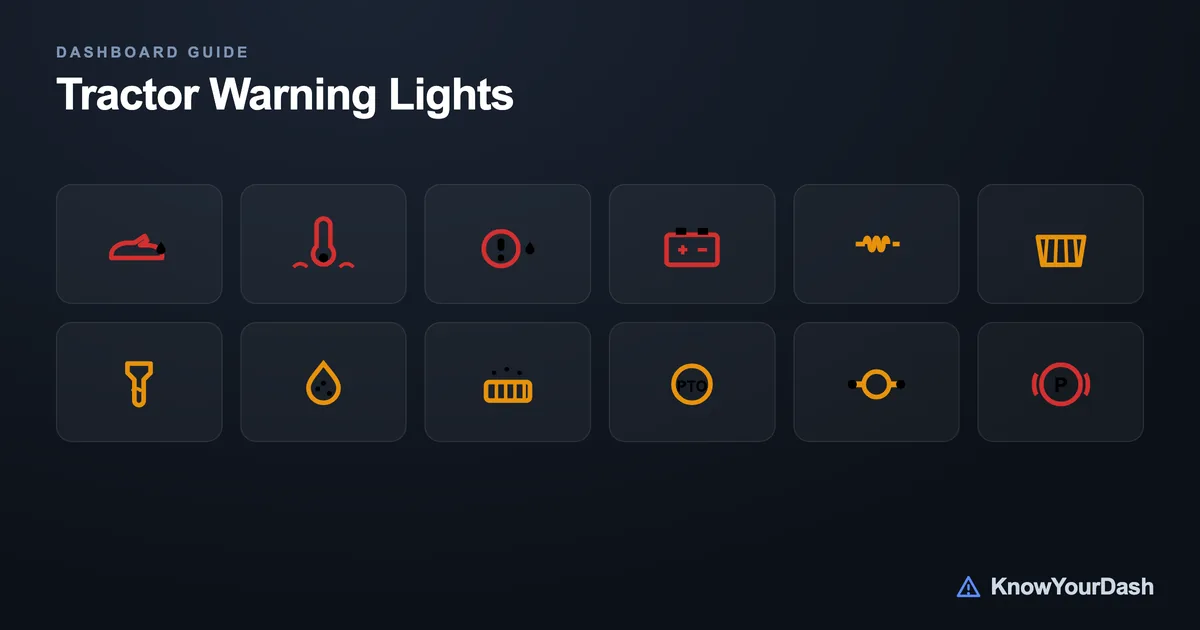
Most tractor dashboard symbols use the same color system regardless of the brand on the hood: red means stop the engine right now, amber means attend to it soon, and green or blue tells you a driver-activated system is running normally. Knowing that one rule covers the vast majority of situations you will face in the field.
This guide explains the warning lights and status indicators found on most modern tractors, what each one signals, and the right response. The symbol shapes vary slightly between John Deere, Kubota, Massey Ferguson, and other brands, but the core meanings are consistent enough that this reference applies across all of them.
The Color System Every Tractor Brand Uses
The Society of Automotive Engineers (SAE) and ISO standards that govern tractors require warning lights to follow a three-tier color hierarchy. Red is reserved for faults that risk immediate component destruction or operator safety. On most cab tractors, a red master STOP lamp also flashes to reinforce urgency. Amber (including yellow and orange on older panels) signals a developing fault or a maintenance reminder - something that needs attention but is not yet critical. Green and blue are informational indicators that confirm a system the operator switched on is active.
This color logic is consistent if you are on a John Deere 6R, a Kubota M7, a Massey Ferguson 7S, or a New Holland T6. The icon shapes differ, but the color-to-severity mapping is the same. On older, simpler open-station tractors the cluster may have only three or four lights; on modern cab tractors with digital instrument clusters the same colors apply but a text code or description often accompanies the lamp.
Red Warning Symbols - Stop the Engine Immediately
These lights demand that you park safely and shut the engine off as quickly as possible. Continuing to operate with a red warning active risks thousands of dollars in engine, transmission, or hydraulic damage - and sometimes operator injury. For brand-specific guidance on John Deere indicators, see the John Deere tractor dashboard symbols guide.
Engine Oil Pressure
Oil pressure has dropped below the safe operating threshold; the crankshaft bearings and camshaft lobes are at risk within seconds
What to do: Stop the engine immediately. Check the oil level with the dipstick before restarting. If the level is correct and the light remains, do not run the engine - suspect a failed oil pump or blocked pickup screen
Coolant Temperature High
Engine coolant is overheating; prolonged overheating warps cylinder heads and destroys head gaskets
What to do: Park safely, lower all implements, and shut down. Let the engine cool before opening the radiator cap. Check coolant level, radiator screen cleanliness, fan belt tension, and water pump condition
Hydraulic System Warning
Hydraulic pressure or temperature is outside safe limits; loss of steering, braking, or implement control can follow on tractors with hydrostatic systems
What to do: Lower implements to the ground, stop, and shut down. Check hydraulic oil level and look for leaks or a clogged oil cooler before restarting
Battery / Charging System
The alternator is not producing enough charge; electrical systems including fuel injection and safety interlocks will fail as battery voltage drops
What to do: Complete the current pass if safe, then park and investigate. Check the alternator belt, battery terminals, and alternator output voltage with a multimeter
Red Master Warning / STOP Lamp
A critical fault has been detected; this lamp triggers alongside a secondary red indicator to identify the specific system affected
What to do: Stop the engine now and identify which secondary lamp is also lit. Never restart without diagnosing the fault first
Amber Warning Symbols - Service Before the Next Shift
Amber lights rarely require stopping in the middle of a field, but they must not be ignored across multiple shifts. Each one represents a system that is either approaching a limit or needs routine maintenance. Failing to act on amber warnings is one of the most common reasons they escalate to red-light emergencies. See also the Massey Ferguson warning lights guide for brand-specific amber indicator details.
Glow Plug / Preheat
The glow plugs are heating the combustion chambers before a cold start; wait for this light to extinguish before cranking
What to do: Hold the key in the preheat position until the lamp goes out - typically 5 to 20 seconds depending on air temperature. Cold-cranking before preheat is complete causes hard starts, excess smoke, and premature glow plug failure
Air Filter Restriction
An intake restriction sensor has detected the air filter is partially blocked, reducing airflow and raising exhaust temperatures
What to do: Clean or replace the primary filter element. Check and empty the pre-cleaner bowl or centrifuge if fitted. Operating with a blocked filter accelerates engine wear and cuts power
Fuel Filter / Water in Fuel
Water has been detected in the fuel-water separator, or the fuel filter has reached its service interval
What to do: Drain the water separator bowl before the next start. If the light reappears immediately, replace the filter cartridge and check for water contamination in the fuel tank
Water in Fuel (Separate Sensor)
A dedicated sensor in the fuel system has detected water, which can damage injection pumps and common rail systems quickly
What to do: Drain the separator bowl and, if heavy contamination is suspected, drain and flush the tank before operating
DEF / AdBlue Level Low
Diesel Exhaust Fluid is running low on Tier 4 Final and Stage V emission-compliant engines; if the tank empties, the SCR system will derate engine power
What to do: Refill with ISO 22241 compliant DEF as soon as practical. Never substitute water or household products - contaminated DEF destroys the SCR catalyst
DPF Regeneration Required
The diesel particulate filter has accumulated soot and needs a high-temperature regeneration cycle to burn it off
What to do: If working under load at normal RPM the engine may complete a passive regen automatically. If the light persists, drive to an open area and allow a stationary regen from the instrument menu, or contact your dealer
Hydraulic Oil Level Low
Hydraulic oil is below the minimum operating level; a cavitating pump will fail quickly and can damage the entire hydraulic circuit
What to do: Top up the hydraulic reservoir to the correct level using the manufacturer-specified fluid before the next operation
Transmission Temperature High
Transmission fluid is running hotter than normal; sustained overheating degrades the fluid and damages clutch packs and seals
What to do: Reduce ground speed, lighten the load, or shift to a lower gear. Allow the transmission to cool, then check the fluid level and the transmission oil cooler for blockages
High Exhaust Temperature (HEST)
Exhaust gases have reached very high temperatures, typically during a DPF regeneration cycle; a warning to keep bystanders and combustibles away from the exhaust outlet
What to do: This is normal during regeneration. Keep the area around the exhaust clear and avoid parking over dry grass during the cycle
Amber Master Caution Lamp
A non-critical fault has been detected; this master lamp activates alongside a secondary indicator that identifies the specific system
What to do: Note which secondary light is also illuminated and address that system. This is not an emergency unless a red lamp is also on
Green and Blue Status Indicators
Green and blue indicators are not faults. They simply confirm that a driver-activated feature is engaged. The important habits around these lights are about operator safety - always check that PTO, differential lock, and park brake indicators match what you intend before moving or dismounting. For guidance on what Kubota's status lights look like in practice, see Kubota tractor dashboard warning lights.
PTO Engaged
The power take-off shaft at the rear of the tractor is rotating; color may be green or amber depending on the model year
What to do: Disengage PTO before dismounting, connecting or disconnecting implements, or working near the rear of the machine. The shaft spins fast enough to cause fatal entanglement injuries
4WD Engaged
Front-wheel drive is active, providing traction to all four wheels
What to do: Disengage on hard sealed surfaces to prevent tire scrub and unnecessary stress on the front axle CV joints and differential
Differential Lock
The rear axle differential is locked, forcing both rear wheels to spin at the same speed to prevent wheel slip in mud or soft ground
What to do: Disengage before turning. Attempting to turn with diff lock engaged resists the steering heavily and can stall the tractor or damage the axle
Parking Brake Applied
The parking brake is engaged; shown in red on most tractors even though it is not a fault warning
What to do: Release fully before moving. Driving with a partially applied parking brake overheats the brake components and causes premature wear
Service Interval Reminder
The engine or transmission has reached a scheduled maintenance interval based on hours run
What to do: Complete the specified service (oil and filter change, greasing, belt inspection) and reset the interval counter per the owner manual
Symbols That Differ Between Brands
While the color system is universal, the lamp shapes and names do vary. John Deere uses a dedicated amber CAUTION lamp that works alongside specific secondary lights; on older Massey Ferguson models, a single warning lamp with a pictogram does the work of several separate lights. Kubota uses a similar three-tier color approach but labels some of its service reminders differently from Deere.
If your tractor has a digital instrument cluster or a color display, fault codes often appear as text alongside the lamp - write down any code numbers and search them in your service manual or ask your dealer to pull them with their diagnostic software. Older open-station tractors with simple analog clusters may only have three or four lamps; use the same color logic to decide urgency. For equipment beyond tractors - forklifts, for example - see the guide to forklift dashboard warning light symbols, where the same color principles apply but the specific lights differ significantly.
One brand-agnostic habit worth developing: at every key-on, all lights should illuminate briefly as a self-test bulb check and then go dark. Any lamp that remains on after the engine starts and reaches normal temperature is indicating an active fault. A lamp that comes on only under heavy load, or only after the tractor has been running for 30 minutes, points to a condition that appears under stress - note the operating conditions when it appears, as that information helps a technician diagnose the root cause.
DIY Checks You Can Do Before Calling a Dealer
Many amber warnings respond to simple checks you can carry out in the yard. Oil pressure and coolant temperature lights frequently trace back to low fluid levels - check the dipstick and the overflow tank before assuming the worst. An air filter light almost always means a dirty filter element that takes 10 minutes to clean or replace. A fuel filter or water-in-fuel light means draining the separator bowl, a job most operators can do in the field.
Glow plug and DEF warnings are operator-responsibility tasks: preheat before cold starting, keep the DEF tank above a quarter full. A parking brake light that stays on while driving usually means the brake is not fully released or the brake-applied switch has failed.
Red lights are a different matter. Oil pressure loss or coolant overheating must be investigated thoroughly before restarting. Topping up the oil and restarting an engine that has run out of pressure 'just to move it to the workshop' frequently turns minor repairs into complete engine replacements. If you are unsure about any light, a step-by-step process for diagnosing and clearing warning lights is covered in how to reset dashboard lights.
Common questions
What does a red warning light on a tractor mean?
A red light on any tractor dashboard signals a critical fault that needs an immediate response. The most common red warnings are low oil pressure, high coolant temperature, and hydraulic system failure. Stop the engine safely as soon as you can and identify the specific light that triggered before restarting.
Can I keep driving with an amber warning light on a tractor?
Usually yes for a short time, but do not let it carry on for days. Amber lights indicate developing problems - clogged air filter, water in fuel, low DEF, high transmission temperature - that worsen if ignored. Plan to address the fault before the next work session.
What does the coil symbol on a tractor dashboard mean?
The coil or spiral symbol is the glow plug preheat indicator. It illuminates when you turn the key before a cold start and tells you to wait until it goes out before cranking. Starting too early causes hard starts, heavy smoke, and accelerates glow plug wear.
Why does the PTO light stay on after I disengage the shaft?
The PTO indicator is driven by a switch or sensor on the engagement lever or shaft. If the light stays on after disengaging, either the PTO is not fully disengaged mechanically, the engagement switch has failed, or there is a wiring fault. Confirm the shaft has stopped rotating physically before assuming it is just a sensor issue.
Do all tractor brands use the same warning light symbols?
The colors are standardized - red for stop, amber for caution, green/blue for informational - but the icon shapes and exact names vary by manufacturer. John Deere, Kubota, Massey Ferguson, and New Holland all follow the same color hierarchy, so even if you are unfamiliar with a specific icon, the color tells you how urgently to respond.
What does it mean when all my tractor warning lights come on at startup?
That is the normal bulb check. All indicators illuminate briefly when you turn the key to confirm every lamp is functioning, then go dark. If any light stays on after the engine starts and warms up, a fault is present and needs attention.