
John Deere Tractor Dashboard Warning Lights: What Each One Means
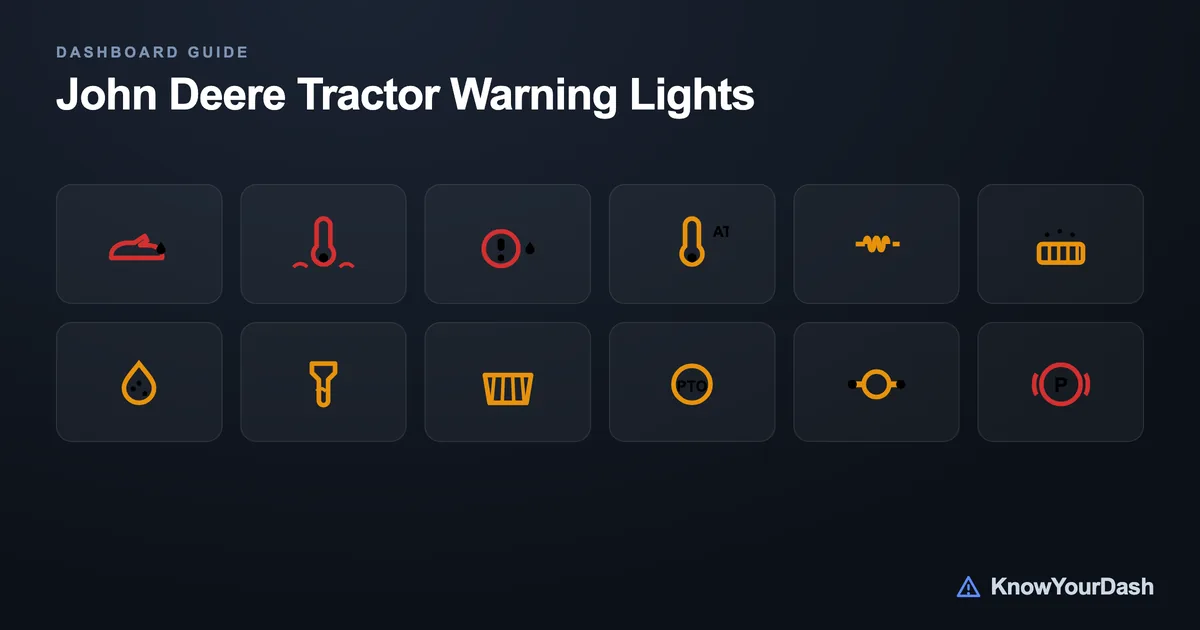
John Deere tractor warning lights fall into two camps: red lights that demand an immediate stop, and amber lights that flag something needing attention before it becomes a red-light problem. If you are staring at a lit lamp and are not sure which camp you are in, the color is the fastest answer - red means stop the engine now, amber means deal with it today.
This guide covers the real warning lights found on John Deere 5, 6, 7, and 8 Series tractors - the lamp names, what triggers them, and the right response for each. For machines that also show numeric fault codes alongside the indicator lamps, see the companion guide on John Deere indicator warning lights and codes.
John Deere Warning Light Symbols and What They Mean
The table below covers the warning lights found across the main John Deere tractor lines. Colors and exact icon shapes vary slightly between model years and display types - newer machines with digital instrument clusters may show the lamp inside a rectangular frame, while older analogue-cluster models use backlit symbols. The meaning and required action are consistent across the range.
Engine Oil Pressure (Low)
Engine oil pressure has dropped below the minimum safe level. One of the most serious alerts on any tractor.
What to do: Shut off the engine immediately. Do not restart until you have checked the oil level and confirmed there are no visible leaks. If the level is fine, suspect a failing oil pump or pressure sensor.
Engine Coolant Temperature (High)
Coolant temperature has exceeded the safe operating range. Overheating can warp cylinder heads and damage head gaskets within minutes.
What to do: Reduce load, idle for 30 seconds to cool the turbocharger, then shut down. Check coolant level, inspect the radiator for debris, and look for leaks before restarting.
Hydraulic Oil Temperature (High)
Hydraulic fluid has reached a critically high temperature, often during sustained heavy loader or three-point hitch work in hot conditions.
What to do: Stop implement operation and idle to cool the fluid. Check the hydraulic filter for restriction. If the temperature does not drop, investigate the hydraulic cooler.
Hydraulic Oil Level (Low)
The hydraulic reservoir level has dropped below the minimum. Low fluid accelerates pump wear and can cause the hitch or loader to respond sluggishly.
What to do: Top up with the correct John Deere hydraulic oil specification for your model. Inspect for leaks at hose connections and hydraulic cylinder seals.
Transmission Oil Temperature
Transmission fluid is running warmer than normal - common during heavy draft work on 6 Series and 7 Series PowerShift models.
What to do: Reduce load or shift to a higher gear to reduce torque demand. If the amber light does not clear after a few minutes of lighter work, check the transmission oil level and the cooler inlet.
Glow Plug / Preheat
Diesel glow plugs are heating before a cold start. Normal operation - the lamp comes on at key-ON and goes off once preheating is complete, usually 2 to 5 seconds.
What to do: Wait for the lamp to go out before turning the starter. If the lamp stays on for more than 30 seconds, one or more glow plugs or the preheat relay may be faulty.
DPF / Exhaust Filter Regen
Soot buildup in the diesel particulate filter has reached the level where a regeneration cycle is needed. A solid lamp means regen is due; a flashing lamp means regen is overdue and should not be delayed further.
What to do: For a solid lamp, run the tractor at full load for 20-30 minutes to allow passive regen. For a flashing lamp, park safely, raise engine speed to 1,500 RPM or higher, and initiate a parked regen from the dash menu.
High Exhaust Temperature (HEST)
Exhaust temperatures are elevated during an active DPF regeneration cycle. This is normal when regen is in progress - it is a caution, not a fault.
What to do: Keep bystanders and flammable material away from the exhaust outlet. Do not switch the engine off mid-regen or the soot will not burn off completely.
DEF / AdBlue Level Low
Diesel Exhaust Fluid is running low, typically when the tank falls below 10-15%. Tier 4 Final engines will enter reduced-power (limp) mode if DEF runs out completely.
What to do: Refill the DEF tank at the next opportunity. Do not substitute with water or other fluids - contaminated DEF will damage the SCR catalyst and require expensive service.
Fuel Filter / Water Separator
Water has been detected in the fuel-water separator, or the primary fuel filter is restricting flow enough to affect fuel delivery.
What to do: Drain the water separator bowl first. If the amber light returns quickly after draining, suspect a contaminated fuel tank or a bad batch of diesel. Replace the fuel filter if it is due.
Water in Fuel
The sensor in the water-in-fuel separator bowl has detected water contamination. On many John Deere models this triggers the same indicator as the fuel filter warning.
What to do: Drain the separator bowl. If water accumulation is happening repeatedly, check the fuel storage tank for condensation or a cracked vent cap.
Air Filter Restriction
The air filter element has become restricted enough to reduce airflow to the engine. Signs alongside this lamp include black exhaust smoke and a drop in power.
What to do: Inspect and clean the pre-cleaner bowl, then check the main air filter element. Replace if the element is damaged or cannot be cleaned adequately.
Battery / Charging System
The alternator is not producing enough voltage to charge the battery while the engine runs. If this lamp comes on mid-field, you may have limited time before electronic systems begin to fail.
What to do: Check the alternator belt for slipping or breakage. Check battery terminals for corrosion. Have the charging system tested at the earliest opportunity.
PTO Engaged
The rear or mid PTO shaft is spinning. This is a status indicator - it tells the operator the shaft is active, not that something is wrong.
What to do: Be aware of the rotating shaft when working near the rear of the tractor. Disengage the PTO before dismounting or attaching implements.
Differential Lock Active
The rear axle differential lock is engaged, which ties both rear wheels together for maximum traction in soft or muddy conditions.
What to do: Disengage the diff lock before turning - cornering with the lock engaged on hard ground can stress the drivetrain. Most John Deere models automatically release the lock above a set ground speed.
4WD / MFWD Active
Mechanical Front-Wheel Drive (MFWD) or 4WD is engaged. Front axle is being driven to improve traction.
What to do: Standard status indicator. On road travel, disengaging MFWD reduces front tire wear. It re-engages automatically on many models when brakes are applied.
Parking Brake / Tractor Lock
The parking brake is engaged. Attempting to move with the brake applied can stress the driveline and damage brake components.
What to do: Release the parking brake before moving. If the lamp stays on after release, check the brake pedal latch mechanism or the brake switch.
Red vs. Amber: The Priority Rule
John Deere uses color coding consistently across its tractor lines. Red always means stop; amber means pay attention. The practical distinction matters when you are mid-field and trying to decide whether to pull to the headland or shut down on the spot.
Always stop for red. Engine oil pressure, coolant temperature, and hydraulic temperature lamps that go red mean something is failing right now. Every minute of continued operation multiplies repair costs. Even if the tractor feels fine, the sensor is measuring a real condition in real time.
Amber gives you some room. A fuel filter warning or air filter restriction lamp allows you to finish the current bout and address the fault at the end of the pass. The exception is a flashing DPF regen lamp - that escalation from solid to flashing means the filter is severely loaded and needs attention before field work continues, or you risk the filter becoming completely blocked.
If you are running a mixed equipment fleet and want to compare how other brands structure their warning systems, Massey Ferguson warning lights and Kubota tractor warning lights both use a similar red/amber hierarchy.
Green and Blue Lights: Status Indicators
Not every lit lamp on a John Deere dashboard means a problem. Green and blue lights confirm that a system is active and working as intended.
- PTO (green): The power take-off shaft is spinning. Always check this light before approaching the rear of the tractor.
- Diff Lock (green): Rear differential lock is engaged. Remember to release before turning on hard surfaces.
- MFWD / 4WD (green): Front-wheel drive is engaged. Reduces tire scrub in corners; disengage on road if front tire wear is a concern.
- High Beam (blue): Headlights are on full beam. Standard indicator identical to passenger vehicles.
- Beacon / Rotating Light (amber or green): A rooftop beacon is activated. Required on public roads in many countries.
None of these require corrective action - they are confirmation lights. If a green PTO lamp comes on unexpectedly when the PTO lever is in the OFF position, however, that does point to a switch or wiring fault worth investigating.
When Warning Lights Suggest a Sensor, Not a Real Fault
Modern John Deere tractors rely on dozens of sensors, and sensors can fail or give false readings - especially in damp conditions, after pressure washing, or on machines with high hours. Common signs that you are dealing with a sensor fault rather than a real problem:
- A red oil pressure or coolant lamp comes on at startup but goes off within a second or two. This often means the sender is slow to pressurize or has an intermittent connection.
- Multiple unrelated warning lights appear at the same time. This usually points to a low battery voltage, a blown fuse, or a failing main control module rather than several simultaneous component failures.
- The lamp appears and disappears with vibration or when the cab door is slammed. A marginal electrical connection is the likely cause.
Even with a suspected sensor fault, treat every red light as real until you have checked fluid levels and confirmed they are correct. A sensor failure and a real low oil level can coexist. Tractor dashboard symbols across multiple brands often use the same ISO icons, which can help you cross-reference if you are unsure about a specific shape on an older machine.
For detailed steps on clearing a warning after a fault has been fixed, see the guide on how to reset dashboard warning lights. For machines that display alphanumeric fault codes alongside the indicator lamps, the John Deere dashboard symbols guide explains how the code numbering system works.
Common questions
What does the red light on my John Deere tractor dashboard mean?
A red warning lamp on a John Deere means shut the engine off immediately. Red lights cover critical faults like low engine oil pressure, high coolant temperature, or a serious hydraulic fault. Continuing to run with a red light lit risks catastrophic damage to the engine or transmission.
What is the John Deere amber warning light?
An amber warning lamp signals a developing problem that is not immediately catastrophic but needs attention the same day. Common amber-light triggers include a clogged fuel or air filter, low DEF level, water in the fuel separator, or a rising transmission temperature. Pull any stored fault codes from the dash to identify the specific system involved.
Why is my John Deere DPF light flashing?
A flashing DPF light means the diesel particulate filter is severely loaded with soot and a passive regeneration has not been able to clear it. You need to initiate a parked regeneration: find a safe open area, raise engine speed to at least 1,500 RPM, and select the regen option from your dash menu. If you ignore a flashing DPF lamp, the filter can become completely blocked and require expensive dealer cleaning or replacement.
What are the green lights on a John Deere tractor?
Green lights on a John Deere are status indicators that confirm a system is active. A green PTO lamp means the power take-off shaft is spinning; a green diff lock lamp means the rear axle is locked; a green MFWD light means front-wheel drive is engaged. None of these signal a fault - they are confirmation lights showing that a system the operator activated is working.
Can I keep working when my John Deere shows an amber DEF or filter warning?
Yes, for a reasonable time. Amber DEF or filter lamps do not require an immediate stop. That said, running the DEF tank fully dry will trigger engine de-rating on Tier 4 Final machines, and a severely clogged fuel filter can eventually cause a no-start. Top up the DEF and address the filter at the end of the day's work at the latest.