
JCB Loader Dashboard Warning Lights and Symbols Explained
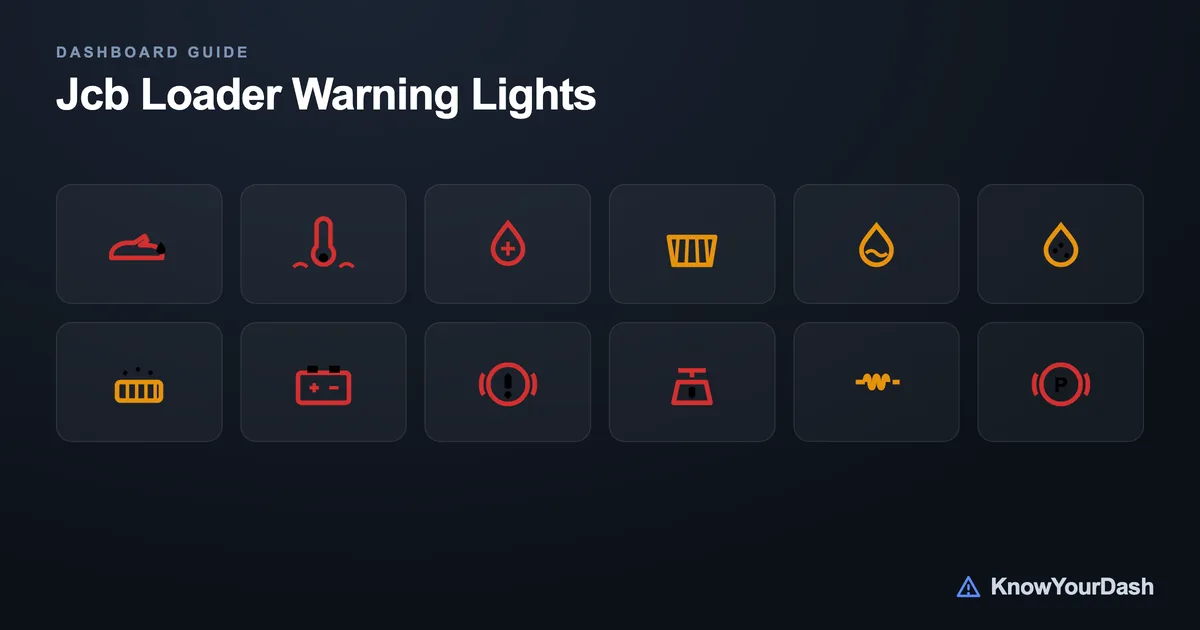
JCB loaders use a colour-coded warning system: red lights require an immediate shutdown, amber lights mean investigate soon, and green or blue lights confirm normal operation. Acting on the wrong light - or ignoring the right one - can turn a minor fault into a seized engine or a blown hydraulic pump.
This guide covers the most common warning lights found across the JCB backhoe loader (3CX/4CX), wheel loader, and compact loader ranges. Because exact symbols vary by model year and spec, always cross-reference your operator handbook for your serial number.
How to read JCB warning light colours
JCB clusters organize warnings into three colour bands:
- Red: Critical fault - stop the machine, cut the engine, and investigate before restarting. Continuing risks engine seizure, fire, or structural damage.
- Amber/Yellow: Fault or condition that needs attention soon. You can typically complete a safe stop, but do not continue working a full shift.
- Green/Blue: Operational status indicators - parking brake applied, glow plugs heating, high beam on. No action needed unless the light is unexpected.
On modern JCB machines with the LiveLink telematics screen or colour TFT dash, a text message often accompanies the light. Read it - the message is more specific than the symbol alone.
Red warning lights - stop immediately
These lights demand an immediate, controlled stop. Cut the engine as soon as it is safe to do so and do not restart until the root cause is found.
Engine Oil Pressure
Engine oil pressure has dropped below the safe threshold. Continuing will cause rapid bearing and crankshaft damage.
What to do: Stop and cut the engine at once. Check oil level when cool. Do not restart until pressure is confirmed normal - call a technician if level is fine but light returns.
Coolant Temperature High
Engine coolant is overheating. Causes include a blocked radiator, low coolant level, faulty thermostat, or a failed water pump.
What to do: Stop work and idle the engine with no hydraulic load for 2-3 minutes, then shut down. Check coolant level only when cool. Clear blockages from the radiator core.
Battery / Charging System
The alternator is not charging the battery, or battery voltage has dropped critically. The machine will eventually lose all electrical function.
What to do: Finish your current movement safely, then stop and investigate. Check the drive belt first - it is the most common cause. Have the alternator tested.
Brake System Fault
Brake circuit pressure is low or a brake failure has been detected. This is a safety-critical fault.
What to do: Do not move the machine. Apply the parking brake, chock the wheels, and call a JCB technician before attempting to drive.
Transmission Oil Temperature High
Transmission fluid is overheating, often from sustained heavy towing, slipping a loaded machine up a slope, or low fluid level.
What to do: Stop the machine in a safe spot, put it in neutral, and idle with no load until the light goes out. Check transmission oil level. If it returns quickly, stop work and call for service.
Amber warning lights - attend soon
Amber lights allow you to bring the machine to a controlled stop, but they are not 'carry on until home time' signals. Left too long, most amber conditions escalate into red ones. Other compact equipment brands use the same colour logic, so the habits you build here transfer across machines.
Hydraulic Oil Temperature High
Hydraulic fluid is running hot. Causes: overloaded circuit, blocked oil cooler, low fluid level, or sustained duty cycle without cooling breaks.
What to do: Stop digging or lifting. Let the engine idle with no hydraulic movement for 10-15 minutes. If the light does not clear, check the oil cooler for debris and hydraulic fluid level.
Air Filter Restriction
The air filter is partially blocked and the engine is not getting enough clean air. Expect black smoke and reduced power if ignored.
What to do: At end of the current task, stop and remove the outer filter element. Blow it clean with compressed air from the inside out. Replace if damaged. Do not run without a filter fitted.
Water in Fuel
The fuel/water separator bowl has collected water. Water reaching the injectors causes expensive damage.
What to do: Do not start or continue running the engine. Drain the separator bowl completely before restarting. If the bowl was very full, bleed the fuel system.
Low Fuel Level
Fuel tank is approaching empty. Running dry on a diesel can introduce air into the fuel system, requiring a full bleed to restart.
What to do: Refuel as soon as possible. If the engine dies from fuel starvation, you will need to bleed the injector system before it will restart.
DEF / AdBlue Low
Diesel Exhaust Fluid level is low. Stage V and Tier 4 Final JCB machines derate engine power progressively if DEF runs out, and eventually prevent restart.
What to do: Refill the DEF tank with ISO 22241-compliant fluid before the level becomes critical. Do not use water or urea from other sources.
DPF / Regeneration Required
The diesel particulate filter is loaded with soot and needs a regeneration cycle to burn it off.
What to do: On machines with passive regen, run at normal operating load and temperature. If the machine requires active regen, follow the on-screen prompt - usually idle in a safe, open area for 20-30 minutes.
Operational and status indicators
These lights confirm that a system is active, not that something is wrong. If they appear unexpectedly - especially the glow plug light after the engine is warm - that itself can indicate a fault.
Glow Plug / Preheat
Glow plugs are heating the combustion chambers for cold-start. Wait for this light to go out before cranking the engine.
What to do: Normal on cold mornings. Wait until the light turns off, then start the engine. If it stays on permanently on a warm engine, a glow plug or relay has failed.
Parking Brake Applied
The parking brake is engaged. This is a status light, not a fault.
What to do: Normal when parked. If it illuminates while driving, stop safely - the brake may be partially applied or the switch has failed.
Work Lights Active
Machine work lights are switched on.
What to do: No action needed. Switch lights off when not in use to preserve the battery.
Service / Maintenance Due
The hour-meter has reached a service interval threshold - typically 250, 500, or 1000 hours depending on model.
What to do: Schedule a service. The light can be reset by a technician after the service is completed. Do not ignore repeated intervals.
Hydraulic and attachment warnings
JCB loaders depend heavily on their hydraulic systems, and a failed hydraulic pump or cylinder seal is a costly repair. The warnings below are worth taking seriously well before they escalate. Forklift hydraulic warnings behave similarly and share the same caution principles.
Hydraulic System Warning
A general hydraulic fault has been detected - could be low pressure, a blocked filter, or a valve fault.
What to do: Stop hydraulic operations. Check hydraulic oil level and filter condition. If level is correct and the light persists, the machine needs dealer diagnosis before further use.
Overload / Lift Capacity Exceeded
The bucket or attachment load exceeds the machine's rated capacity. Continuing risks tipping or boom failure.
What to do: Lower the load to the ground immediately. Reduce payload and check load charts for your specific model and lift height. Never exceed rated capacity.
JCB fault codes and when to call for help
Newer JCB machines with the Command Plus or LiveLink display show alphanumeric fault codes alongside warning lights - for example EC 0100/3 for a crankshaft sensor fault or P0401 for an EGR flow issue. These follow SAE J1939/OBD conventions on the engine side but use JCB-specific codes on machine systems.
Write down the code before clearing it. Take a photo of the display. A cleared code with no repair just returns when the fault condition recurs. If you see multiple lights illuminate at once, or a red light that does not clear after the obvious check (oil level, coolant level, fuel), stop the machine on level ground, note all codes, and call a JCB service dealer rather than trying further diagnosis in the field.
Need to reset warning lights after a genuine repair? See how to reset dashboard lights step by step for the general approach - but note that JCB systems often require a dealer scan tool for a proper clear.
Common questions
What does the red warning light on my JCB mean?
A red warning light on a JCB means stop the machine immediately. Red lights cover critical faults like low engine oil pressure, coolant overtemperature, and brake system failure - conditions that can destroy the engine or create a safety hazard within minutes of continued operation. Shut down, investigate, and do not restart until the root cause is fixed.
Can I keep working with an amber light on a JCB loader?
You can typically finish the immediate task and move to a safe stopping point, but do not ignore an amber light for a full shift. Amber conditions like hydraulic overtemperature, air filter restriction, or low DEF will escalate to red faults or cause expensive damage if left unaddressed. Check the cause before starting the next work cycle.
Why is the hydraulic oil temperature light coming on?
The most common cause is sustained heavy hydraulic work without a cooling break - repeatedly lifting maximum loads without pause is typical. Other causes include a clogged hydraulic oil cooler (check for debris packed against the fins), low hydraulic fluid level, or a faulty cooler fan. Stop all hydraulic movement and idle the engine for 10-15 minutes. If the light returns within a few minutes of resuming work, have the cooler and fluid level inspected.
What does the water-in-fuel light mean on a JCB?
It means the fuel/water separator bowl has accumulated water that needs to be drained before you run the engine. Water reaching diesel injectors causes serious and expensive damage. Locate the separator bowl (usually on the fuel filter housing), open the drain valve, and let it drain until only clean diesel runs out. Close the valve and bleed the system if needed before restarting.
How do I clear warning lights on a JCB after a repair?
For basic faults like low fuel or a drained battery, the light clears itself once the condition is corrected. For fault codes stored in the ECU - engine, transmission, or machine control unit codes - you typically need a JCB ServiceMaster diagnostic tool to clear them. Simply cycling the ignition does not erase stored codes on modern JCB machines. Your dealer or a mobile JCB technician can connect and clear them after confirming the repair is complete.