
Linde Forklift Dashboard Warning Light Symbols Explained
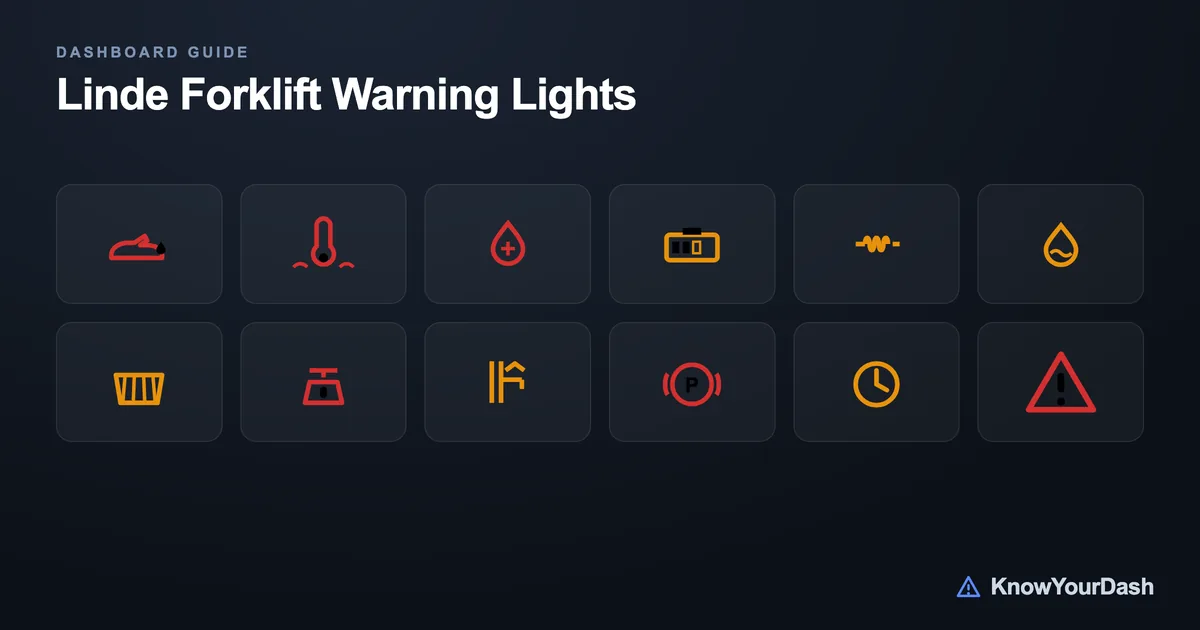
A light on your Linde forklift is telling you something specific. Red means stop now and investigate; amber means attend to it before the next shift; green or blue is informational. This guide covers the most common symbols across Linde H series diesel/LPG trucks and E series electric models.
Linde uses a layered warning system: some faults just log a code, others sound a buzzer and restrict travel or lift, and a handful lock the truck out entirely. Knowing which lights can wait and which cannot is the difference between a quick fix and a blown engine.
Red warning lights - stop and act
Red lights on a Linde instrument panel are stop-and-investigate signals. Keep operating with a red light active and you risk permanent drivetrain or engine damage. Lower the forks, move the truck clear of the aisle, shut down, and check the indicated system before restarting.
Engine Oil Pressure
Lubricating oil pressure has dropped below the safe minimum. The buzzer also sounds on most H series models.
What to do: Stop immediately. Check oil level on the dipstick before restarting. If level is fine and the light returns, do not run the engine - call service.
Coolant Temperature High
Engine coolant is overheating. Common causes are a clogged radiator screen (Linde H trucks work in dusty environments), low coolant level, or a failed thermostat.
What to do: Park safely, lower forks, shut down. Let the engine cool before opening the radiator cap. Clean the radiator screen and check coolant level.
Master Warning / System Fault
A general stop fault has been detected. A numeric fault code (T or L series) typically appears on the display at the same time.
What to do: Note the fault code displayed, park safely, shut down. Report the code to your service technician - do not clear it without diagnosing the cause.
Hydraulic System Fault
A hydraulic pressure or flow fault has been detected. On H series trucks this can indicate a pump fault or severe low fluid.
What to do: Stop lift operations. Check hydraulic fluid level at the reservoir sight glass. If level is correct, have the hydraulic circuit inspected by a technician.
Amber warning lights - service soon
Amber lights allow you to finish a lift cycle and park safely, but the issue should be resolved before the truck returns to work. Ignoring amber warnings long enough usually turns them into red ones.
Hydraulic Oil Temperature High
Hydraulic fluid has reached elevated temperature. Continuous high-cycle lifting in a warm environment is the usual cause.
What to do: Allow the truck to idle with no load for 5-10 minutes to let fluid cool. If the light persists, check hydraulic oil level and look for a blocked oil cooler.
Engine Oil Temperature High
Engine oil is running hotter than normal, a precursor to oil-pressure problems if left unchecked.
What to do: Reduce load cycles and allow cooling. Check engine oil level. If the light stays on, schedule service.
Water in Fuel
Water has been detected in the fuel pre-filter separator (diesel models only). Water in fuel can destroy injectors if left unaddressed.
What to do: Drain the water separator as described in your operator manual before the next shift. If the light returns immediately after draining, check the fuel source for contamination.
Air Filter Restricted
The intake air filter is clogged to the point where airflow is restricted. Common in dusty warehouse or outdoor environments.
What to do: Inspect and replace the air filter element. Do not blow compressed air back through a paper element - replace it.
Fuel Filter / Water Separator
The fuel filter is due for replacement or the separator bowl needs draining (diesel models).
What to do: Replace the fuel filter at the next scheduled opportunity. Drain the separator bowl immediately if water is present.
Service Due
Scheduled maintenance interval has been reached. Linde H series trucks track this by operating hours.
What to do: Arrange an oil and filter service. Continuing past the service interval can void warranty coverage.
Glow plug and cold-start indicators
On Linde diesel forklifts the glow plug light is one of the most misread symbols in the warehouse. A flashing glow-plug symbol means the pre-heat cycle is actively running - wait until it stops flashing and either goes out or holds steady before turning the key to start. Cranking during the preheat cycle stresses the starter and gives a rough cold start. The light goes out in 3-10 seconds depending on ambient temperature.
Glow Plug / Preheat
Diesel engine is preheating the combustion chambers. Flashing = in progress; steady = ready to start.
What to do: Wait for the symbol to stop flashing before cranking. Do not bypass the preheat cycle in cold conditions.
Electric model (E series) indicators
Linde E series electric forklifts replace the engine gauges with a battery discharge indicator (BDI) and electric motor temperature readings. The BDI is a segmented bar - full segments mean a full charge, and the segments drop as you work through the battery. When only the red segment is lit, stop and recharge. Driving on the red segment collapses battery cell voltage and shortens the overall battery life significantly.
Linde's onboard charger warning (where fitted) lights up amber if the charge cycle was interrupted or the charger reports a fault - check the charger connection and try a fresh charge cycle before reporting a fault.
Battery Discharge Indicator (BDI)
Battery is deeply discharged. The truck may automatically reduce travel speed or cut lift to protect the battery.
What to do: Return to the charging station immediately. Do not override the speed or lift restriction.
Battery / Charging Fault
A fault in the charging circuit or battery management system has been detected.
What to do: Check charger connections and the battery water level (flooded lead-acid). If the light remains after a full charge cycle, have the charger and battery tested.
Overload and mast safety indicators
Linde forklifts equipped with a load management system show an overload indicator when the load weight or the mast lift height exceeds the rated capacity for that combination. This is not a suggestion - exceeding rated capacity can tip the truck. The mast lift limit light activates on trucks fitted with a free-lift or high-mast option when the inner mast has reached its maximum safe extension height.
For more on Linde-specific warning lights or if you work across mixed equipment, the general forklift symbol guide covers lights common across all brands.
Overload Warning
Load exceeds the rated capacity for the current mast height and load center. The truck may automatically prevent further lift.
What to do: Lower the load immediately and redistribute or reduce it to within the rated capacity plate limits.
Mast / Lift Limit
The mast has reached the maximum programmed lift height or free-lift limit.
What to do: Do not force the mast further. Lower slightly to clear the limit sensor if you need to reposition.
Parking brake and seat belt reminders
Linde forklifts use a dead-man seat switch linked to the parking brake circuit. If the operator leaves the seat without engaging the parking brake, an audible alarm sounds and the travel direction may be cut off. The parking brake light stays on any time the brake is applied - it should go out when you release it and sit in the seat. If it stays on while driving, the brake may be dragging or the switch has a fault.
Parking Brake Active
The parking brake is engaged. Also illuminates if the seat switch detects no operator.
What to do: Ensure you are seated, release the parking brake lever or pedal. If the light stays on while moving, stop and have the brake and switch inspected.
Seat Belt Reminder
The operator seat belt is not fastened. OSHA requires seat belt use on sit-down counterbalanced forklifts.
What to do: Fasten the lap belt before moving. This is a regulatory requirement, not just a recommendation.
Fault code display - what the numbers mean
Modern Linde H and E series trucks show numbered fault codes alongside the warning lights. T-codes relate to traction (drive system): T100-T199 are warnings you can observe, T200-T999 are faults that should be addressed promptly. L-codes relate to the lift circuit: same tier structure. Never clear a fault code by disconnecting the battery before writing it down - the code tells the technician exactly which module logged the fault and often which pin or sensor is involved. A cleared code with an unresolved cause will return, usually at the worst possible moment.
If you work across multiple brands, the forklift warning light symbol guide covers how other manufacturers structure their fault code systems.
Common questions
What does the lightning bolt warning light mean on a Linde forklift?
A lightning bolt (or zigzag symbol) on a Linde H series typically points to an electrical fault in the traction circuit - often a motor controller issue or a wiring fault detected by the Linde Truck Control (LTC) module. A fault code should appear on the display at the same time. Note the code and call your service technician. On the H20T in particular, this light combined with loss of travel often indicates the LTC has gone into protective shutdown.
Can I drive a Linde forklift when the amber service-due light is on?
Yes, briefly. An amber service-due light means you have reached the maintenance interval but there is no active mechanical failure. You can complete the current task and park safely, but the truck should not return to regular work until the service is carried out. Running significantly past the interval risks voiding any warranty and accelerates wear.
How do I know when to recharge a Linde electric forklift?
The BDI bar on the instrument panel shows remaining charge as illuminated segments. Linde recommends returning to the charger when the indicator reaches the final red segment - roughly 20-30% remaining. Regularly discharging to zero shortens the lead-acid battery life considerably. Opportunity charging (topping up during breaks) is fine on most Linde E series models.
Why does my Linde forklift show a red light but then start fine?
Some Linde models perform a bulb-check on startup - all warning lights flash briefly then go out. If a red light comes on and immediately goes out as the engine starts, that is normal self-test behavior. If it comes on while the truck is running, that is a real fault. Always note whether the light appeared during the startup sequence or after the engine was already running.
What is the bowl with a water drop symbol on my Linde diesel?
That is the water-in-fuel separator warning. Water has collected in the pre-filter bowl to a level that could damage the injection system. Drain the separator bowl using the thumb drain on the bottom of the filter housing before operating the truck again. If the light returns after draining, the fuel supply itself may be contaminated - check the storage tank.