
New Holland Tractor Dashboard Symbols Explained
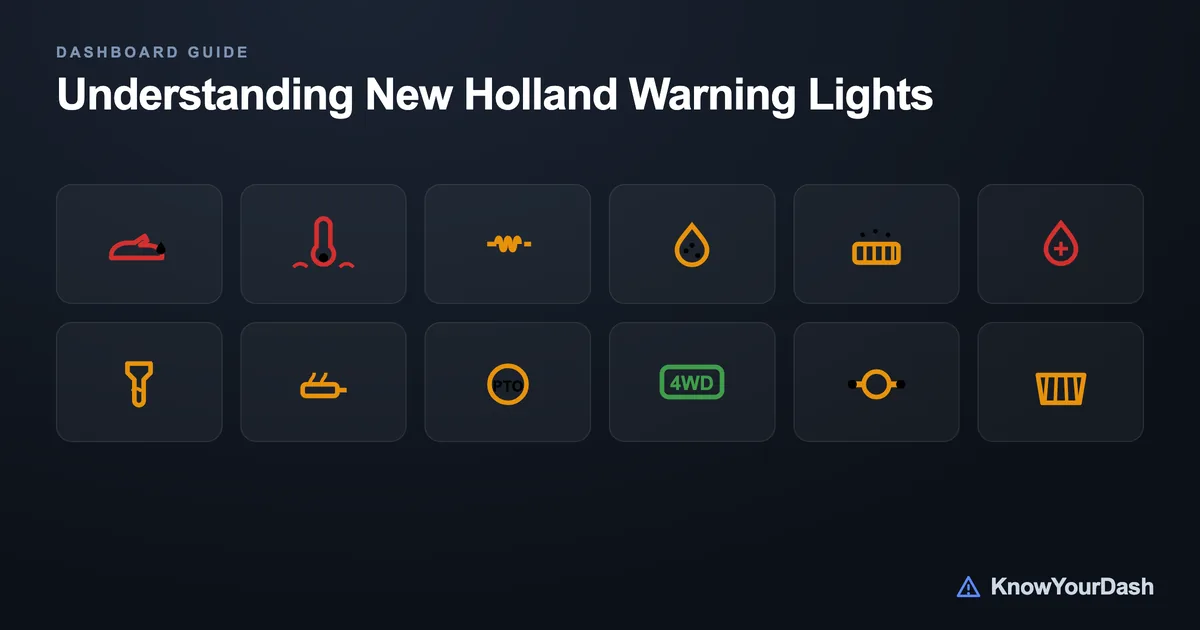
New Holland tractor dashboards use a three-color system: red means stop immediately, amber means service soon, and green or blue is informational. Most symbols appear on all T-series tractors - T6, T7, and T8 - though newer models with a dot-matrix display cluster will also show a description alongside the amber icon.
This guide covers the most common dashboard lights you will see in the field, what triggers them, and what to do when they appear. For a broader look at symbols across other brands, see our guide to tractor dashboard symbols and their meanings.
New Holland dashboard warning lights - full list
New Holland organizes its warning lights by urgency. The rows below cover the symbols you are most likely to see on T6, T7, and T8 series tractors. Red lights are listed first, followed by amber service warnings, and then the green and blue informational lights.
On tractors fitted with a color dot-matrix instrument cluster (common on T7 and T8), an amber lamp will often be paired with a text description and a separate warning buzzer. On earlier T6 models with analog gauges, you will see only the symbol.
If multiple amber lights come on at startup and then extinguish after a few seconds, that is a normal bulb-check routine - not a fault. A light that stays on after the engine reaches normal operating temperature is the one to investigate.
Engine Oil Pressure
Engine oil pressure has dropped below the safe minimum. This is one of the most critical warnings on any tractor - low oil pressure will destroy rod bearings and the crankshaft within minutes.
What to do: Stop the tractor immediately, shut the engine off, and do not restart. Check the oil level. If oil level is fine, do not run the engine until the cause is found - possible causes include a failing oil pump, a blocked oil pickup, or an internal leak.
Coolant Temperature High
Coolant temperature has exceeded the safe operating range. Running an overheated engine risks warped cylinder heads and a blown head gasket.
What to do: Bring the tractor to a safe stop, reduce load to idle if possible, and monitor the temperature gauge. If it does not drop within a minute, shut down. Check coolant level when cool, inspect for blocked radiator fins, and check that the cooling fan is operating.
Hydraulic System Fault
A serious fault in the hydraulic circuit has been detected. This can accompany low hydraulic pressure or an electronic control unit fault affecting the lift system.
What to do: Lower all implements to the ground before shutting down. Do not raise or operate the three-point hitch until the fault is diagnosed. On T7/T8 models, note any fault code shown on the display.
Master Warning (Stop)
A critical system fault has been detected that requires the operator to stop the tractor. This generic red warning typically appears alongside a more specific indicator.
What to do: Bring the tractor to a safe stop, lower all implements, and shut the engine off. Check for accompanying specific warning lights or fault codes on the display.
Glow Plug / Preheat
The glow plugs are warming the combustion chambers before a cold start. This is normal cold-weather operation, not a fault. The light will extinguish once the engine is ready to start.
What to do: Wait for this light to go out before cranking the engine, especially in temperatures below 5 degrees C (40 F). If the light stays on after the engine is running and fully warm, the glow plug control module or a glow plug itself may need attention.
DEF / AdBlue Level Low
The Diesel Exhaust Fluid tank is low. New Holland's Tier 4 Final engines use SCR (Selective Catalytic Reduction) to control NOx emissions - the system requires DEF to function. As level drops further, the warning escalates through several stages.
What to do: Refill the DEF tank as soon as possible. New Holland's system will progressively limit engine power and eventually prevent the tractor from starting if DEF runs out entirely. Keep a spare 10-litre container on hand for field situations.
DPF / Particulate Filter
The diesel particulate filter is loading up with soot and needs to regenerate. On most New Holland T-series tractors, regeneration is automatic during normal field operation at adequate load and exhaust temperature.
What to do: If the light appears during light-load or stationary work (such as loader work at low throttle), allow the tractor to work at higher load or initiate a stationary forced regen through the instrument cluster menu. Repeated inhibited regens lead to a blocked filter requiring dealer service.
Hydraulic Oil Temperature High
The hydraulic fluid has overheated, usually from sustained heavy loader or three-point hitch cycling in high ambient temperatures.
What to do: Reduce hydraulic demand - stop cycling the loader or hitch and let the tractor idle for a few minutes with the hydraulic oil cooler unrestricted. Check that the hydraulic oil cooler fins are clean. If the warning recurs routinely, have the oil cooler and hydraulic fluid level inspected.
Fuel Filter / Water Separator
Water has accumulated in the fuel filter/water separator bowl, or the filter element is approaching its service interval. Water in diesel fuel can cause injector corrosion and erratic running.
What to do: Drain the water separator bowl using the drain valve at the base of the filter housing. If you also see a fuel filter restriction warning, replace the filter element. Always use quality diesel and treat long-stored fuel with a biocide.
Water in Fuel
A sensor in the fuel system has detected water contamination in the fuel. This is common after refueling from a contaminated source or in humid conditions with a fuel tank that is not kept full.
What to do: Drain the fuel filter water separator immediately. If the warning persists after draining, there may be larger water contamination in the tank itself. Avoid running the engine with water in the fuel - it can cause injector failure.
Air Filter Restriction
The air filter is partially blocked, restricting airflow to the engine. The restriction sensor monitors pressure differential across the filter element.
What to do: Check the air filter element and pre-cleaner bowl. Clean or replace the primary filter element. Do not run the tractor with a blocked air filter - reduced airflow increases exhaust smoke, raises exhaust temperatures, and can shorten engine life.
Transmission Oil Temperature High
The transmission or powershift gearbox oil is overheating. This can happen during sustained draft work in high gear with high slip, or when operating a loader at extreme angles with continuous clutch slipping.
What to do: Reduce the working load or shift to a lower gear to reduce slip. Let the tractor idle with light load for a few minutes. If the temperature does not drop, stop and allow the transmission to cool before continuing.
High Exhaust Temperature (HEST)
The exhaust aftertreatment system is at elevated temperature, either during normal DPF regeneration or as a fault condition. On T7 and T8 tractors this light appears during regen cycles to warn bystanders of hot exhaust gases from the tailpipe.
What to do: During a normal regen cycle, keep people away from the exhaust outlet. If this light appears outside a regen event or is accompanied by a fault code, stop and investigate - sustained high exhaust temps outside regen can indicate an aftertreatment system fault.
PTO Engaged
The power take-off shaft is active. On New Holland tractors with AutoPTO, the light may flash when the implement is raised (PTO disengaged) and glow steady when the implement is lowered (PTO re-engaged automatically).
What to do: This is an informational light only. Ensure any bystanders are clear of the PTO shaft and implement before re-engaging. Never work around an engaged PTO without proper guarding.
4WD / Front Axle Engaged
Four-wheel drive is engaged. The front axle is being driven along with the rear. On Auto 4WD systems, the tractor will engage and disengage 4WD automatically based on wheel slip.
What to do: Informational. Disengage 4WD on hard surfaces such as roads to reduce tyre wear and avoid transmission windup. Engage it for field work, loader operations, and any work on soft or slippery ground.
Differential Lock
The rear axle differential lock is engaged, forcing both rear wheels to turn at the same speed regardless of traction. This is useful in soft or uneven ground conditions.
What to do: Informational. Disengage the diff lock before turning, as it will prevent normal steering and can damage the axle if forced through a tight turn. On most New Holland models, briefly releasing foot pressure on the diff lock pedal or lifting off the brake will disengage it automatically.
Parking Brake On
The parking brake is engaged. If this light remains on while driving at working speed, either the park brake has not been fully released or there is a fault in the park brake circuit.
What to do: Verify the parking brake is released before moving off. A buzzer will sound on most T-series models if you attempt to drive with the park brake engaged. If the light stays on after releasing the brake, have the brake circuit inspected.
Work Lights Active
The cab or rear work lights are switched on. Standard informational indicator.
What to do: No action required. Switch lights off when not needed to avoid draining the battery if the engine is off and the electrical system is still live.
How the DEF / AdBlue warning stages work
DEF warnings on New Holland Tier 4 Final tractors do not just flash once - they escalate through defined stages. Understanding this sequence helps you avoid being stranded mid-field.
At around 10% DEF remaining, the amber DEF light appears and a buzzer sounds briefly at startup. At roughly 5%, the light stays on continuously and the warning buzzer is more persistent. Below 2.5%, power is progressively derated - you will notice reduced maximum engine speed and lower draft capacity. At 0%, depending on the market, the tractor may refuse to restart after the next engine shutdown.
The DEF tank capacity varies by model - typically 30-40 litres on T7 models - and consumption runs at roughly 3-5% of diesel usage. A full tank at the start of a heavy working week should last most operators comfortably, but topping up at the same time as you refuel is a simple habit that avoids the problem entirely.
If the DEF light comes on shortly after you have just refilled, suspect a contaminated DEF supply (diesel mixed in by mistake, or old DEF that has broken down). Contaminated DEF triggers the same sensor response as empty. The DEF tank will need to be drained and flushed before the fault clears.
DPF regeneration: what to expect
On New Holland tractors with SCR-DPF aftertreatment (Tier 4 Final), the diesel particulate filter accumulates soot during operation. The engine management system burns off that soot periodically in a process called regeneration, during which exhaust temperatures rise significantly.
Under normal working conditions - sustained field work at medium-to-high load and engine speed - regeneration happens automatically without any operator input, and you may not even notice it is happening. The HEST (High Exhaust Temperature) light will illuminate briefly during regen as a safety alert.
Problems arise with light-load or intermittent operation: loader work at low throttle, constant short runs, or idling. In these conditions the exhaust never gets hot enough for passive regen, soot builds up, and eventually the tractor requests a stationary forced regen through the instrument display. If you repeatedly dismiss or inhibit these requests, the DPF will block and require removal for professional cleaning - an expensive and time-consuming job.
If your New Holland is throwing DPF fault codes regularly, check if you are consistently working at loads high enough to trigger passive regen. Switching to a lower gear at higher throttle for the same ground speed often solves chronic regen problems. Our guide to Massey Ferguson dashboard warning lights covers how the same Tier 4 DPF system behaves on a different brand for comparison.
Reading the T7 and T8 color display cluster
New Holland T7 and T8 tractors fitted with the IntelliView or CommandView cab use a color instrument cluster with a central dot-matrix screen. This display gives you more information than a traditional gauge panel - when an amber or red warning triggers, the relevant symbol appears in the warning zone alongside a short text description and a fault code if applicable.
The cluster has a dedicated warning area at the top of the display where active faults stack. Scrolling through them with the navigation button shows each fault's code, description, and in many cases a suggested action. Writing these codes down before driving to a dealer saves diagnostic time and ensures the fault is not lost after a restart.
On T6 models with analog gauges, there is no text support - you rely on identifying each symbol shape and color from the instrument panel legend or this guide. The warning lamp layout is printed on an overlay above the gauges on most T6 variants.
For a side-by-side comparison of how different tractor brands handle their dashboard layouts, see our guide to Kubota tractor dashboard warning lights and the overview of John Deere tractor dashboard warning lights.
For other brands, compare these with our Massey Ferguson and John Deere warning light guides.
Common questions
What does a red light mean on a New Holland tractor?
A red warning light on a New Holland means stop immediately and shut the engine off. The most critical red lights are engine oil pressure and coolant temperature - both can cause severe engine damage within minutes if ignored. After stopping safely and lowering any raised implements, investigate the cause before restarting. Do not restart to 'drive to the workshop' - have it transported if needed.
Why is my New Holland DEF light on after I just filled the tank?
If the DEF light stays on after refilling, the most likely cause is contaminated DEF. Diesel accidentally mixed into the DEF tank, or DEF that has degraded from age or heat exposure, will trigger the sensor in the same way as an empty tank. The DEF quality sensor cannot distinguish between low level and poor quality fluid. Drain and flush the DEF tank and refill with fresh, in-date fluid from a sealed container. Check the DEF for a clear, slightly blue-tinted appearance - cloudy or discolored fluid is suspect.
What triggers the HEST (high exhaust temperature) warning on New Holland?
The HEST light appears whenever the exhaust aftertreatment system reaches elevated temperatures, which happens normally during a DPF regeneration cycle. It is a safety indicator to warn you that the exhaust outlet is hot - keep people and flammable materials away from the tailpipe while it is on. If the HEST light appears without an accompanying DPF regen being in progress, or stays on persistently, that points to a fault in the aftertreatment system worth investigating with a dealer scan tool.
Why does my New Holland PTO light flash when I raise the implement?
On tractors with AutoPTO, the system automatically engages the PTO when the implement is lowered and disengages it when raised. A flashing PTO light while the implement is raised means AutoPTO is armed and ready to re-engage when you lower the implement - it is not a fault. A steady green PTO light means the shaft is actively turning. If you want to fully disable the PTO, turn the PTO switch off rather than relying on the raise/lower action.
How do I start a forced DPF regeneration on a New Holland T7 or T8?
When the tractor requests a stationary regen, the option appears in the instrument cluster menu. Park the tractor in an open area away from flammable material, set the handbrake, and follow the on-screen prompts - typically this involves confirming the regen request and holding a button for a set time while the engine runs at an elevated idle. The HEST light will come on during the process. The regen cycle typically takes 20-40 minutes. Do not interrupt it once started if possible - an aborted regen leaves the filter partially cleaned.
Are New Holland T6, T7, and T8 dashboard symbols the same?
The core warning symbols - oil pressure, coolant temp, glow plug, DEF, DPF, hydraulic, PTO, diff lock, 4WD - are the same or very similar across the T-series range. The main differences are in the display type: T6 models typically use traditional analog gauges with separate warning lamps, while T7 and T8 models often feature a color dot-matrix cluster that shows fault codes and text descriptions alongside the symbols. Newer T6 models with the IntelliView display close this gap.