
Dodge Gas Cap Warning Light - What Triggers It and How to Fix It
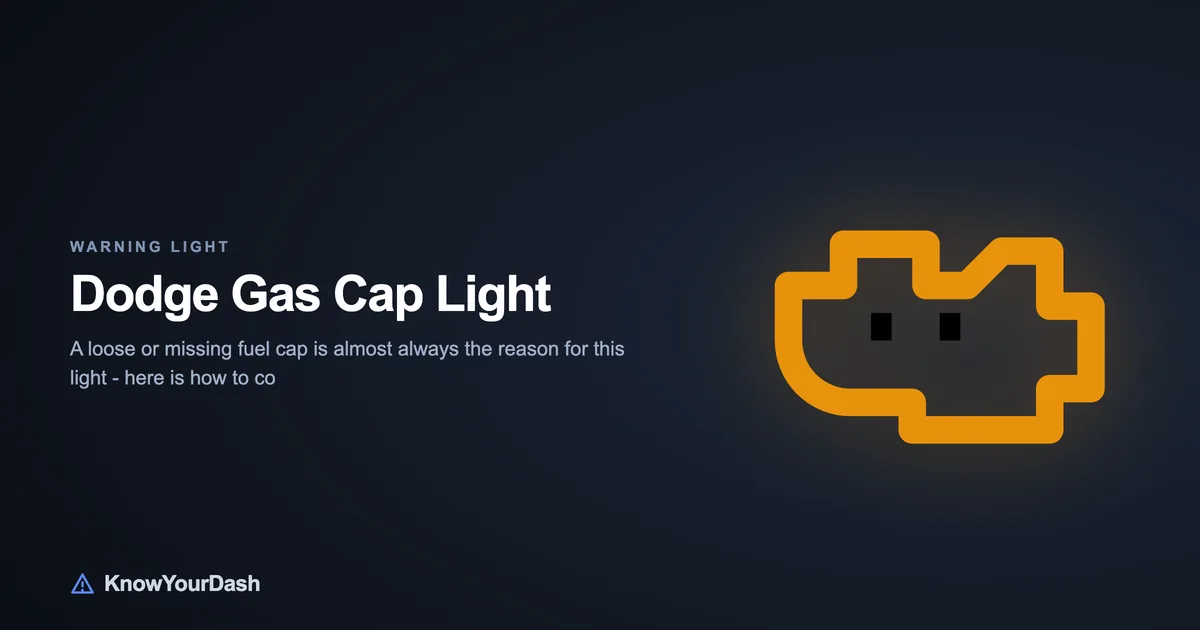
When a Dodge displays a 'GASCAP' message in the instrument cluster or trips the check engine light right after a fill-up, the fuel cap is the first thing to check. The EVAP (evaporative emission control) system runs a pressure test on the fuel tank after every drive cycle, and even a cap that is one click short of fully tightened is enough to set a fault.
The fix is almost always free and takes about thirty seconds. Re-tighten the cap until you hear or feel it click, drive normally, and the light clears on its own within one to three drive cycles. If it does not, a cracked cap or a leak elsewhere in the EVAP system is next on the list.
What the GASCAP message actually means
Dodge EVAP systems seal the fuel tank and route fuel vapors through a charcoal canister to be burned in the engine rather than released to the atmosphere. After the engine shuts off and cools down, the system runs a self-test by checking whether it can hold a small amount of pressure or vacuum. A loose or damaged gas cap is a large, obvious hole in that sealed system, so the test fails and the message appears.
Depending on the model year, you will see either a text display reading GASCAP in the trip odometer area, or the amber check engine light, or both. Some newer Ram trucks and Durango models also add a wrench or service light. The underlying fault codes stored are typically P0457 (large EVAP leak, cap loose or off), P0456 (small EVAP leak), or P0455 (very large leak).
Check Engine / MIL (Malfunction Indicator Lamp)
An emission-related fault has been detected. In this context, the EVAP system failed its self-test due to a loose or missing fuel cap.
What to do: Tighten the gas cap until it clicks. If the light is still on after three drive cycles, read the stored codes with an OBD-II scanner before doing anything else.
Step-by-step fix
Work through these steps in order before spending money on parts:
- Step 1 - Tighten the cap. Open the fuel door and turn the gas cap clockwise until you hear it click one or more times. The cap uses a ratcheting mechanism and needs to seat fully. If you hear no click, the threads may be stripped or the cap may be cracked.
- Step 2 - Drive normally for 1-3 trips. The EVAP test only runs under certain conditions (warm engine, moderate speed, partial fuel level). Give it a couple of normal drive cycles of 15-20 minutes each and the light will go out on its own if the cap was the only problem. There is no need to disconnect the battery.
- Step 3 - Replace the cap if the light returns. Gas caps are inexpensive, typically $10-$25 from any auto parts store. Make sure the replacement is rated for your specific model. After fitting a new cap, drive another 2-3 cycles to let the system re-verify.
- Step 4 - If the light stays on after a new cap, get a smoke test. A shop pressurizes the EVAP system with inert smoke and traces where it leaks out. Common culprits beyond the cap include a cracked purge valve hose, a faulty vent valve solenoid, or a degraded charcoal canister. These are shop repairs.
If you want to speed up the light-clearing process, an OBD-II scanner can clear the code directly after you tighten the cap. The light will not return if the test passes. For a full walkthrough on resetting different dash lights, see how to reset dashboard warning lights step by step.
Why the light sometimes comes on even when the cap is tight
A few situations catch owners off guard:
- The cap is cracked or the seal is worn. Plastic caps develop hairline cracks over time, especially in climates with extreme temperature swings. The cap looks fine but cannot hold pressure. Replacing it solves the problem.
- Wrong cap. Using a cap from a different vehicle or an aftermarket cap without the correct pressure rating triggers EVAP codes even when it appears to seal. Match the part number to your vehicle.
- Recent fuel fill-up with the engine running. Some older Ram models set a fault if you open the cap while the engine is on or immediately after refueling before the system has equalized. Turn the engine off before removing the cap and re-tighten before starting.
- EVAP leak elsewhere in the system. If the GASCAP message returns repeatedly and a new cap did not fix it, the leak is upstream in the system. This is the scenario where a smoke test is the only reliable diagnostic approach.
Owners of Chrysler and Jeep vehicles on the same Stellantis platform see an identical situation - the Chrysler gas cap warning light guide covers the same codes and steps in detail. The Dodge Ram and Chrysler Pacifica share nearly identical EVAP architecture.
Will a loose gas cap affect how the car runs?
Not directly. A loose cap does not affect fuel delivery, engine performance, or transmission behavior. You will not notice anything different behind the wheel. The reason to fix it promptly is the emissions test - a stored EVAP code means the car will fail a state or provincial I/M inspection, and in some jurisdictions the check engine light alone is an automatic fail regardless of which code is stored.
There is also a minor fuel economy angle: a cracked or missing cap allows raw fuel vapors to escape from the tank rather than being captured and re-burned. The effect is small but real over thousands of miles.
The Dodge ETC (Electronic Throttle Control) lightning bolt is a very different situation - that light signals a throttle body fault and does affect performance. If your light looks like a lightning bolt rather than a wrench or text readout, see the Dodge ETC warning light guide instead.
Common questions
How long does it take for the gas cap light to go off after tightening?
Usually 1-3 complete drive cycles. A drive cycle means starting a cold engine, driving at varying speeds for at least 15-20 minutes, and shutting it off. If you only make short trips, it may take a few days of normal driving. If you want it gone faster, an OBD-II scanner can clear the code immediately after you re-tighten the cap.
Can I keep driving with the GASCAP message on?
Yes, it is safe to drive. The EVAP fault does not affect engine operation, braking, or steering. The main reasons to fix it promptly are to pass an emissions inspection and to make sure a bigger underlying EVAP leak is not developing.
What code does a loose gas cap throw on a Dodge?
The most common is P0457, which specifically describes a large EVAP leak consistent with a missing or loose cap. You may also see P0456 (small leak) or P0455 (gross leak). Any of these can point to the cap, but only P0457 specifically calls it out by name in most OBD-II code definitions.
I replaced the gas cap but the light is still on. What now?
Give it 2-3 more drive cycles with the new cap fitted - the system needs time to run the EVAP test and confirm the leak is gone. If it still does not clear, scan for codes. If P0456 or P0442 (small leak) persists, the source is somewhere other than the cap - a smoke test is the most reliable way to find it.
My Dodge Ram gas cap light comes on every time I fill up. Why?
Most often because the cap is not being tightened enough after refueling. Turn it clockwise until you hear and feel it click - one click is not always enough on some models. If the click mechanism feels loose or the cap spins freely, the ratchet is worn and the cap needs to be replaced. Some owners also find that a generic aftermarket cap does not seal properly on their specific Ram fuel neck, and switching to an OEM or dealer-sourced cap resolves the issue for good.