
Forklift Dashboard Warning Light Symbols Explained
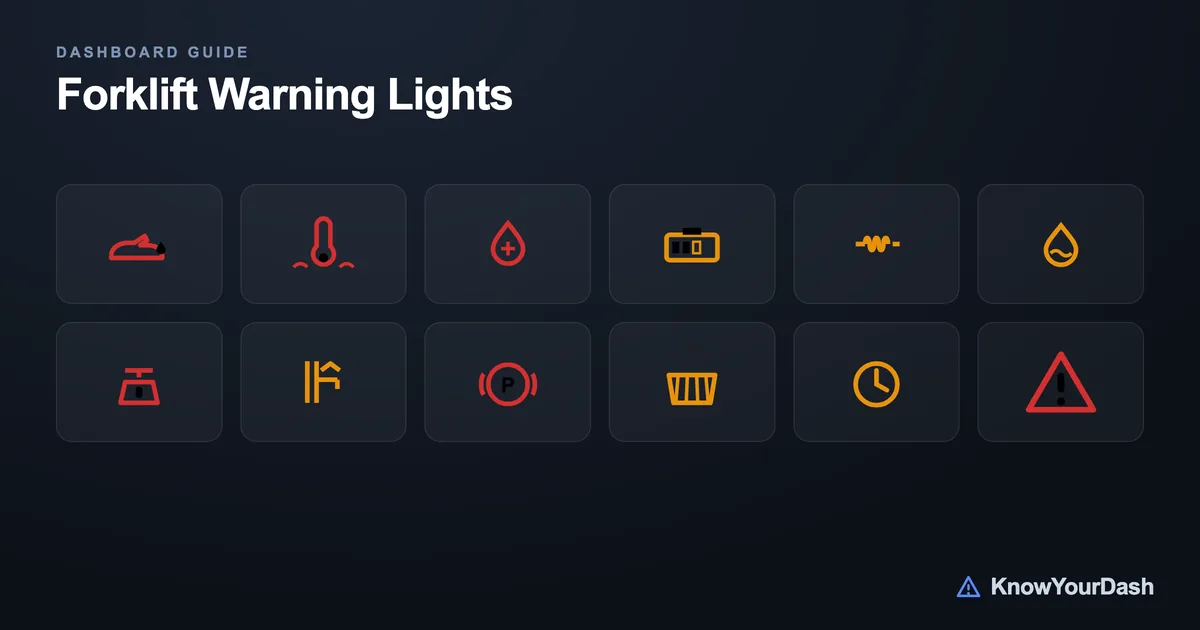
Forklift warning lights follow a universal logic: red means stop and investigate, amber means attend to it before the next shift, and green or blue is informational. The exact symbol graphics vary by manufacturer - Toyota, Linde, Hyster, Yale, Crown, Komatsu, and Raymond each use slightly different icons - but the underlying systems and color coding are consistent across the industry.
OSHA requires every operator to be familiar with all instrument panel indicators before operating a lift truck. This guide covers the symbols you will find on virtually every sit-down counterbalanced forklift, whether it runs on diesel, LPG, or batteries.
Red warning lights - stop now
Any red light on a forklift instrument panel is a stop-now signal. Lower the forks, move the truck out of the aisle, shut down, and investigate before operating again. Running through a red warning is the most common way warehouse operators create expensive repair bills.
Engine Oil Pressure
Lubricating oil pressure has dropped below the minimum threshold. The engine is at risk of seizure within seconds if run without adequate pressure.
What to do: Stop immediately. Check oil level on the dipstick with the engine off. If the level is correct and the light returns on restart, do not run the engine - call a technician.
Coolant Temperature High
Engine coolant is overheating. Common causes are a clogged radiator screen (especially in dusty or debris-heavy environments), low coolant level, or a failed water pump.
What to do: Park safely, lower forks, shut down. Let the engine cool before opening the radiator cap. Clean the radiator screen and check coolant level before restarting.
Hydraulic System Fault
A critical fault in the hydraulic system has been detected - this can be low fluid pressure, a pump failure, or a circuit fault on electric forklifts.
What to do: Stop lift operations. Check hydraulic fluid level at the reservoir sight glass. If level is correct, have the hydraulic circuit inspected before returning the truck to service.
Overload
The load weight or the combination of weight and lift height exceeds what the capacity plate allows. The truck may automatically prevent further lift.
What to do: Lower the load. Check the capacity plate for the rated load at the current lift height and load center. Redistribute or reduce the load before attempting to lift again.
Master Warning / System Stop
A general stop-level fault has been detected. On trucks with a display, a numeric fault code typically appears alongside this light.
What to do: Note any fault code on the display, park safely, shut down. Do not clear the code without diagnosing the cause - report it to your technician.
Amber warning lights - service soon
Amber lights allow you to finish a lift cycle and park safely, but they should not be ignored for more than a shift or two. Left unattended, most amber warnings escalate into red ones.
Hydraulic Oil Temperature High
Hydraulic fluid has reached elevated temperature. Continuous high-cycle lifting in a warm environment is the most common cause.
What to do: Allow the truck to idle without load for 5-10 minutes to let fluid cool. If the light stays on, check hydraulic oil level and look for a blocked oil cooler screen.
Water in Fuel
Water has accumulated in the fuel pre-filter separator bowl. Diesel only. Water in the fuel system can destroy injectors if left unaddressed.
What to do: Drain the water separator bowl as described in your operator manual before the next shift. If the light returns immediately after draining, the fuel storage tank may be contaminated.
Air Filter Restricted
The intake air filter element is clogged enough to restrict airflow to the engine. Common in dusty warehouses, foundries, and outdoor applications.
What to do: Replace the air filter element. Do not attempt to clean and reuse a paper element by blowing compressed air through it from outside.
Fuel Filter / Water Separator
The fuel filter is due for replacement or the separator bowl needs draining.
What to do: Replace the fuel filter at the next service. Drain the separator immediately if water is indicated.
Service Due
The scheduled maintenance interval based on operating hours has been reached.
What to do: Arrange an oil and filter service. Most forklift manufacturers specify service every 250-500 hours depending on the application.
Transmission Temperature High
On torque-converter IC forklifts, the transmission fluid is running hot. Heavy loading on grades or sustained high-speed travel are typical causes.
What to do: Reduce load cycles and allow the truck to idle. If the light persists after a cool-down period, check transmission fluid level and inspect the cooler.
Electric forklift indicators - BDI and battery health
Electric sit-down counterbalanced forklifts replace most of the engine-related gauges with a battery discharge indicator (BDI). The BDI is typically a segmented bar: all segments lit means a full charge, and segments drop as you draw down the battery. Different brands mark the danger zone differently - some use a red segment, others flash the last bar - but the rule is universal: return to the charger when you reach the last indicator before the red zone.
Driving on a deeply discharged battery collapses individual cell voltages and can permanently reduce total capacity. Many modern electric forklifts automatically reduce travel speed and cut lift height when the BDI reaches a critical level - this is a protection feature, not a malfunction. For a closer look at how one major manufacturer implements this system, see the Linde forklift warning lights guide.
Battery Discharge Indicator (BDI) - Critical
Battery is nearly exhausted. The truck may reduce travel speed or prevent lifting automatically to protect the battery cells.
What to do: Return to the charging station immediately. Do not override or bypass the speed or lift restriction.
Battery / Charger Fault
A fault in the battery management system or charger circuit has been detected. Common causes include a loose charger connection, a failed cell in a lead-acid pack, or a thermal management issue in a lithium-ion system.
What to do: Check charger connections and battery water level (flooded lead-acid). If the light remains after a full charge cycle, have the battery and charger tested by a qualified technician.
Cold-start and glow-plug indicators
Diesel forklifts have a glow-plug preheat sequence that must complete before cranking in cold conditions. The light typically flashes during preheat and either holds steady or goes out when ready. Cranking before the preheat cycle finishes stresses the starter and causes rough cold starts. In ambient temperatures above about 15 degrees Celsius the preheat cycle may be very short or skipped entirely - this is normal.
Glow Plug / Preheat
Diesel engine preheat cycle is in progress (flashing) or complete and ready to start (steady).
What to do: Wait for the symbol to stop flashing before turning the key to start. Do not bypass the preheat cycle in cold ambient conditions.
Mast safety and load management indicators
Lift-limit and mast warning lights activate on trucks equipped with a free-lift or high-mast option when the inner mast reaches its maximum programmed extension. Some forklifts also have a mast tilt alarm that sounds when the mast is tilted back beyond the safe transport angle with a raised load.
If your operation uses different forklift brands alongside each other, the same principles apply to compact equipment. The Case skid steer warning lights guide and the Takeuchi dashboard symbols guide cover similar hydraulic and lift-system indicators for compact machinery.
Mast / Lift Height Limit
The mast has reached the maximum programmed lift height or free-lift limit.
What to do: Do not force the mast further. Lower slightly to clear the limit sensor if you need to reposition the load.
Operator presence and parking brake
OSHA mandates that sit-down counterbalanced forklifts have a seat switch or operator presence system that cuts travel and sometimes lift when no operator is detected in the seat. This interlock is not a fault - it is a deliberate safety feature. If the truck cuts out when you shift your weight, the seat switch may need adjustment or replacement.
The parking brake indicator light should be on any time the brake is engaged and should go out immediately when released while seated. If it stays on while travelling, the brake may be dragging, which causes premature brake wear and heat buildup in the rear axle area.
Parking Brake Active
The parking brake is engaged or the operator seat switch detects no one in the seat.
What to do: Sit fully in the seat and release the parking brake. If the light stays on while moving, stop and have the brake circuit and seat switch inspected.
Seat Belt Reminder
The operator seat belt is not fastened. OSHA requires lap belt use on sit-down counterbalanced forklifts.
What to do: Fasten the belt before moving. This is a regulatory requirement.
Work lights and informational indicators
Green and blue lights on forklift dashboards are almost always informational - they confirm a feature is active rather than warning of a fault. Work lights (also called auxiliary lights or travel lights) show as green when switched on. The high-mast free-lift indicator on some trucks shows green when the inner mast is in the free-lift zone, confirming you have vertical travel before the outer mast sections begin to rise - useful in height-restricted areas.
For step-by-step guidance on clearing a warning light after a repair, the dashboard light reset guide covers the process across different equipment types.
Work Lights Active
The auxiliary work or travel lights are switched on.
What to do: Informational only. Switch off the lights if they are not needed to conserve battery charge on electric trucks.
Understanding fault codes alongside the lights
Modern forklifts from Toyota, Linde, Hyster, Yale, and Crown all combine warning lights with a numeric fault code display. The code format varies - Toyota uses a two-digit system with a letter prefix, Linde uses T and L codes, Hyster and Yale use module-based codes - but the principle is the same: a code identifies exactly which system logged the fault and often which sensor or circuit is involved.
Write down the code before restarting or disconnecting the battery. Clearing the code by pulling a fuse or disconnecting the battery removes the record from the control module, which makes diagnosing a recurring fault much harder. If the light comes back after clearing, the underlying cause is still present. For brand-specific details on how Linde implements its fault code tiers, see the Linde forklift warning light guide. For tractor-based equipment that shares similar hydraulic and PTO warning systems, Kubota tractor warning lights is worth reading alongside this one.
Common questions
What does a red light on a forklift mean?
A red warning light means stop and investigate now. Lower the forks to the ground, move the truck clear of the aisle, shut down, and check the system shown by the light before restarting. Common red lights include engine oil pressure, coolant temperature, hydraulic system fault, and overload.
What is the BDI light on an electric forklift?
BDI stands for Battery Discharge Indicator. It is a segmented bar on the instrument panel that shows remaining battery charge - all segments lit means fully charged, and the segments drop as you work through the battery. Most manufacturers use a red final segment or a flashing last bar as the warning to return to the charger. Continuing to operate in the red zone collapses battery cell voltages and permanently reduces total battery capacity over time.
Can I keep driving a forklift with an amber light on?
Yes, briefly. Amber lights indicate a condition that needs attention but does not require an immediate stop. Finish the current lift, park safely, and investigate before returning the truck to regular service. Amber lights left ignored long enough almost always escalate into red ones.
Why does my forklift cut out when I shift in my seat?
That is the operator presence (deadman) seat switch doing exactly what it is designed to do. When the switch detects no weight in the seat, it cuts travel and sometimes lift as a safety measure - this is an OSHA-required feature on sit-down counterbalanced forklifts. If the truck is cutting out while you are seated normally, the switch may need adjustment or replacement.
How do I reset a forklift warning light after a repair?
For most forklifts, simply repairing the underlying fault and cycling the key off and on will clear the light. If the light stays on after a genuine repair, the control module may need a manual fault clear using a service tool or diagnostic software. On older models a 15-second key-off period is sometimes enough. Never clear a light by pulling a fuse or disconnecting the battery without writing down the fault code first.
What does the forklift overload light mean?
The overload light means the load you are trying to lift exceeds the rated capacity for the current mast height and load center distance. Forklifts have a capacity plate on the mast that shows the maximum load at various heights and load centers - the rated load decreases as you raise the mast higher. Exceeding the rating can tip the truck forward. Lower the load, check the capacity plate, and reduce the load weight or lower the lift height.